

Wild and Plucky Indie TTRPGs You Could Be Playing Instead of D&D
Bareknuckle indie TTRPG reccos from Breakup Gaming Society’s ongoing interview series with Walt of Līber Lūdōrum and The Bogfolk Collective.
An Unranked, Curated TTRPG Recco Series With Editor, Reviewer and Player Walton Wood
Meeting Walt of Līber Lūdōrum and The Bogfolk Collective gave Breakup Gaming Society a more passionate and discerning window into the vibrant, freewheeling world of indie TTRPGS. Walt is much more well-traveled in these lands, but we both celebrate the same things: adventurous themes and concepts, the indie spirit, an unusual hook or setting. These are our ongoing talks of unique specimens that thrive in the broad lands outside The Dragon Game — and which deserve your consideration.
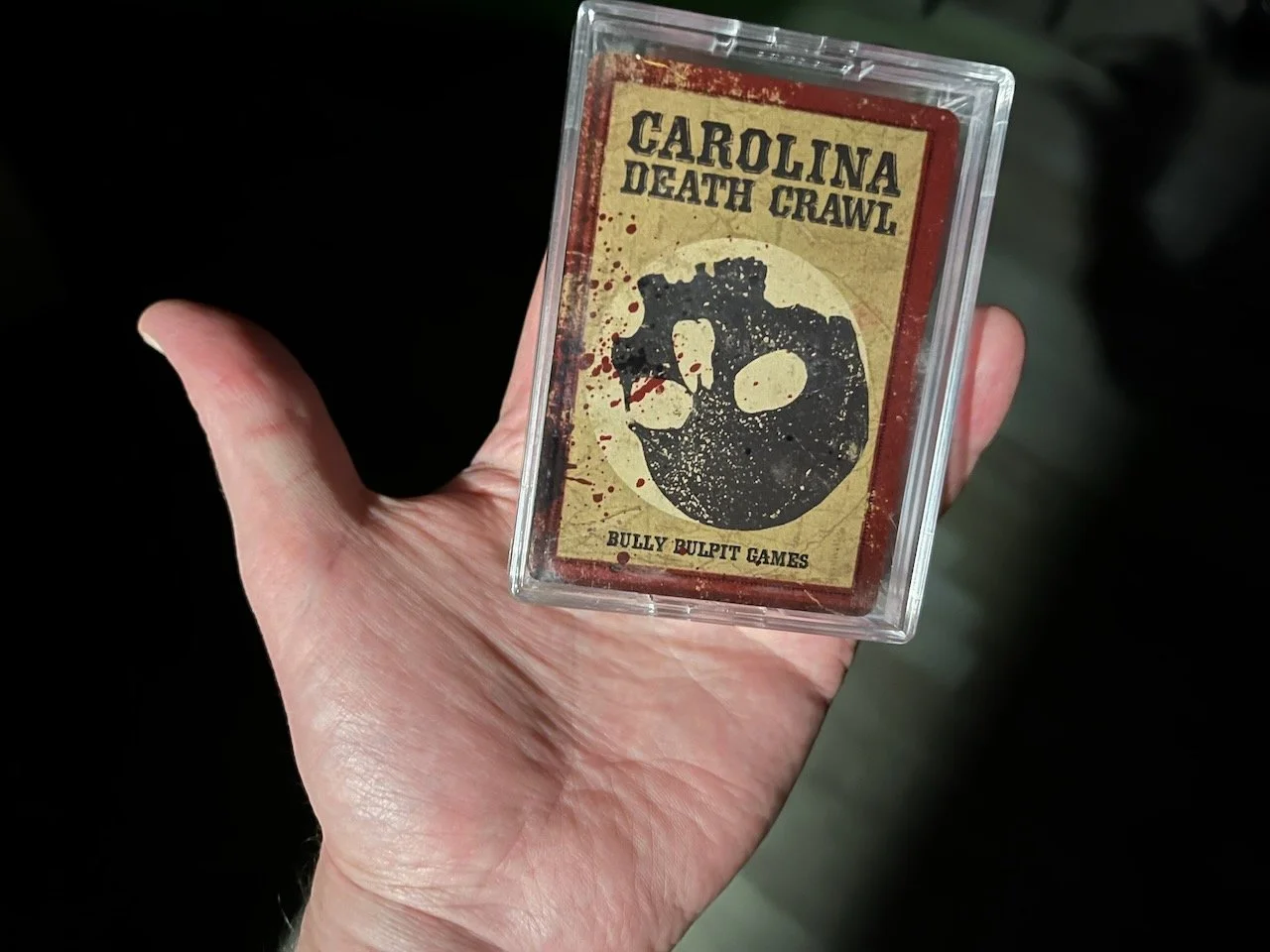
Carolina Death Crawl
Bully Pulpit Games
A Southern Gothic card-driven and GM-less roleplaying game set during the American Civil War. Only one of you is going to live. Discussed in Episode 96: Carolina Death Crawl RPG (Lemonade Beer Punch Sold Separately)
Burnout Reaper and Digital Angel
SandroAD
The future is here, the bills are due, and we can’t pay ‘em. Time to harvest organs. All kinds of organs in Burnout Reaper and Digital Angel, discussed in Episode 100: Pyrotechnics Review, Playing With Dystopia, Surrendering Secret Wars

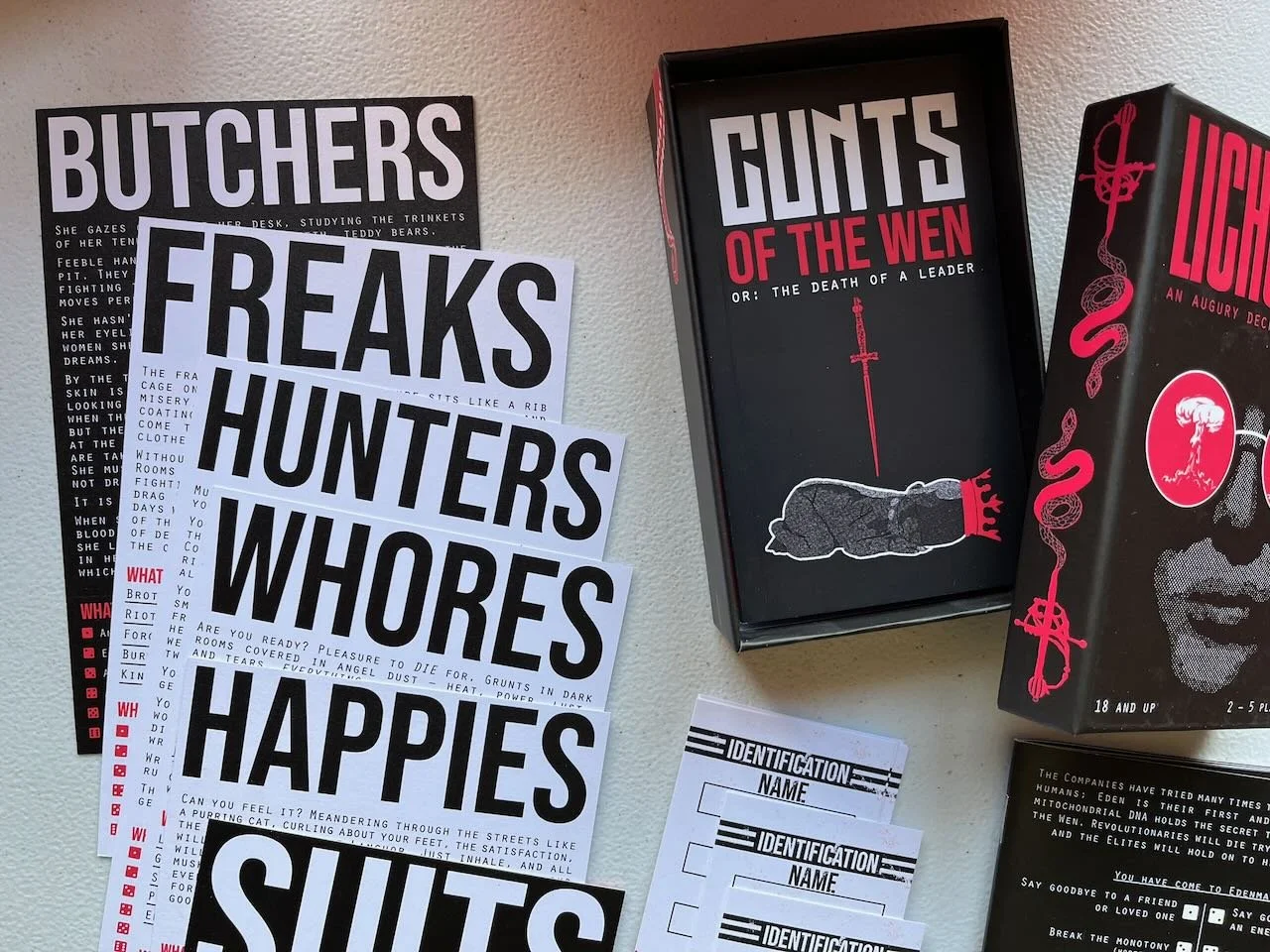
Lichoma
Bogfolk, Strega Wolf van den Berg
Learn what to expect from life in The Wen — a collapsing city where meat is the last remaining unit of economic value. Lichoma is beautifully conceived and fearsome to consider. Discussed in Episode 104: Lichoma TTRPG Deep-Dive Interview + SETI Preview
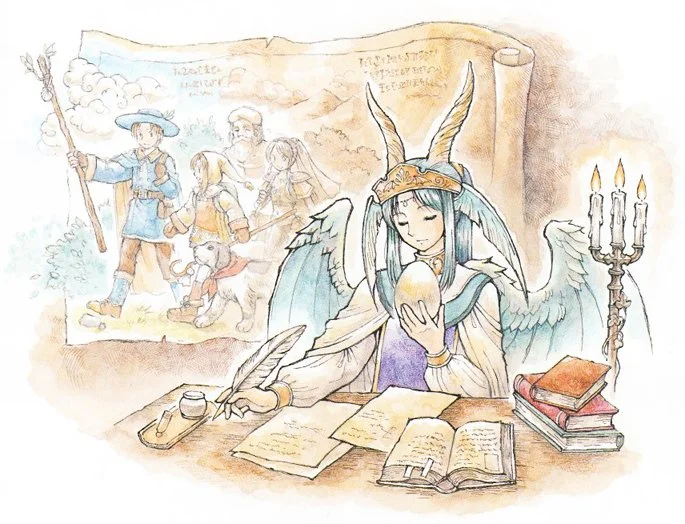
Ryuutama
Kotodama Heavy Industries, Atsuhiro Okada
Be a bard in the medieval Japanese countryside, get in some rascally misadventures, and undertake an inventive journey in group storytelling. Click here for our interview with Walt, who gives us an introductory tour of the game’s concepts.
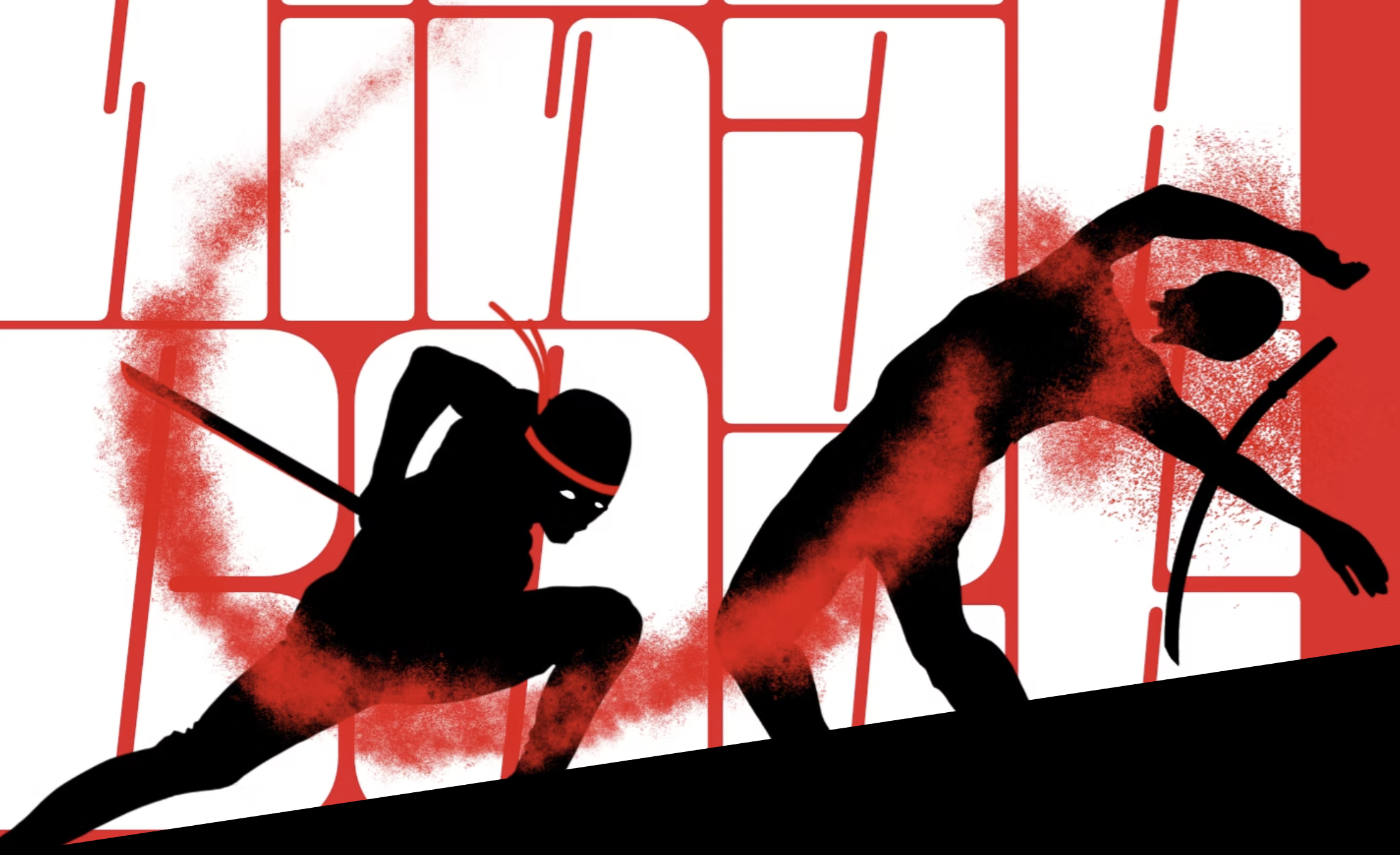
NINJA BORG
Hammer and Hatchet, Walton Wood and Rugose Kohn
A freewheeling all-you-can-kill buffet where mastery of the game system lies on the foundational precept of kicking ass. BGS talked to creators Walton Wood and Rugose Kohn about the concept — and the tactical advantages of making a flaming cocaine tornado.
MOTHERFUCKIN’ BONUS: HEAR A LIVE PLAY OF NINJA BORG WITH THE CREATORS OF THE GAME

Metal Queens ov Skull Mountain
Parenthesis Press, Neal Stidham
Let’s ride, bitches: MQoSM’s simple chord structure will have you in the middle of the Demon Wastes — and thrashing out tall tales with the help of other Queens — in no time. Hear why Walt still loves this one.

The Ghost in the Shell
Mantic Games, Alessio Cavatore
Designer Alessio Cavatore and writer Zak Barouh are charged with delivering the complexity, flavor, and lethality of the original manga to the table. Find out about the challenges and the solutions in this interview with Cavatore.

Yap
Frog Queen, Frances Wiley
A solo journaling game that gently guides you store to store with a die and deck of cards. By the end, you’ll have the receipts for a story. All in doable portions. Fun menu. Five stars. Walton and I talk to the creator in Episode 115.
Hear my work with the Dwelling solo journaling RPG.
Hear my work with the Dwelling solo journaling RPG.
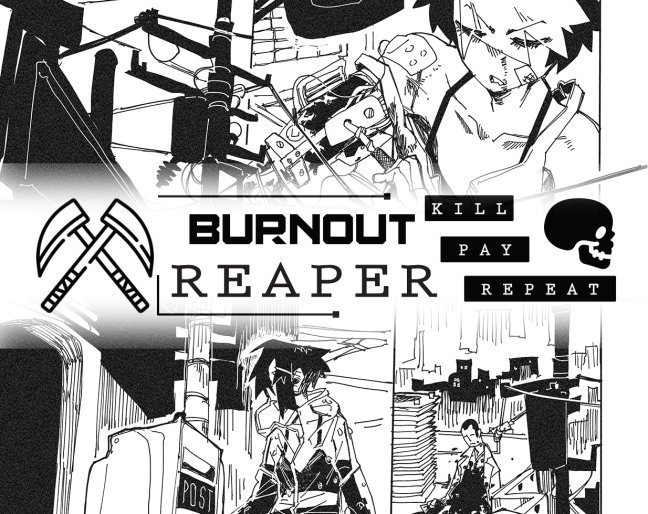
Burnout Reaper and Digital Angel TTRPGs: Walt Shows Us Two Challenging Itch.io Refugees
Harvest organs from deadbeats or die. Harvest lust from paypigs or die. Meet two indie TTRPGs that fled Itch.io and live on the in the near-future frontiers of debt, desperation, lust and greed.
In the wake of the stir created by Itch.io’s mass purging of darkly themed TTRPGs in the face of pressure from payment processors and others, we talk with Walt (Līber Lūdōrum, Bogfolk) about two wild creations in that exodus: Burnout Reaper and Digital Angel by Sandro AD.
As related to me, Alessandro AD pulled these games from Itch.io at first news of the culling; they survive for now on a Google Drive, where they are free to download and play.
What are we in for here? Walt outlines these bleak near-future systems where economic exploitation manifests in debt, desperation, sex and violence. [FAIR WARNING: Heavy themes all around. In addition, The F slur appears in this audio as part of a quote from Digital Angel’s description copy.]