


Check it Out, I Made a Paloma
Fruit, salt and fizz edit out all the parts of a tequila I used to like drinking straight, but don’t anymore.
This is adapted from the script of Episode 98, “ˆLight and Get Away, It’s the Fall Small Games Preview.”
The promise of getting my Vitamin C and a buzz was one of the things that compelled me to make my first-ever Paloma, which I tried during a recording with Walt, who had his own fixins down in Florida.
I wish I could play the audio for you, but the first thing I learned about a Paloma is that when you eat almost nothing all day, then realize you’re due on Discord for a recording session in 20 minutes and you haven’t exercised yet and you rush through a choppy upper-body routine, then use a Paloma as your recovery drink…you get fucked up pretty fast.
Fucked up enough to somehow not capture or download all the audio.
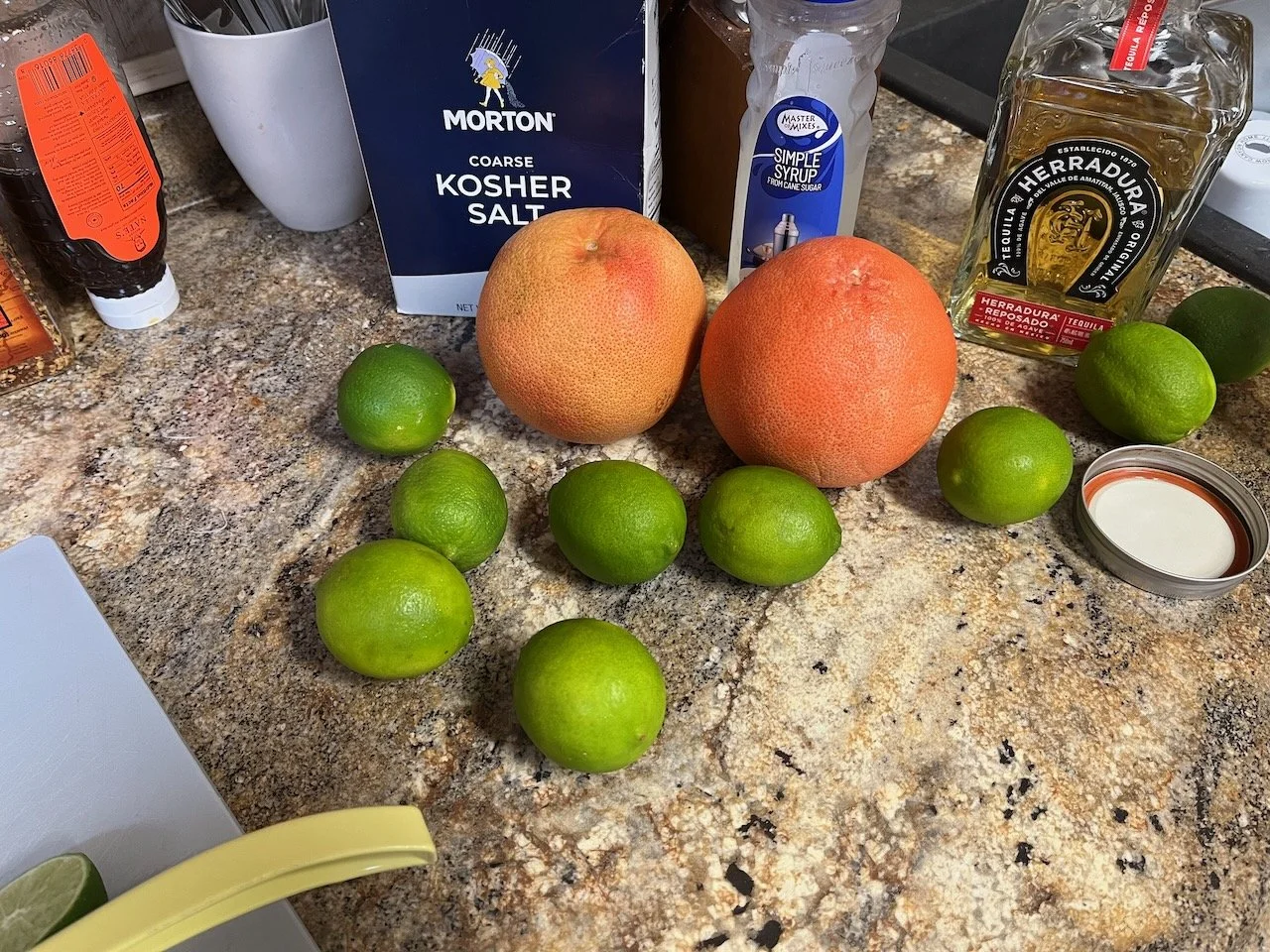
It’s gotta be the juice, because it’s sure as hell not the liquor
Nonetheless, I remember much of it. Here’s how I went at this fruit-juice-and-tequila concoction: I had Herradura Reposado, which for the first time, I didn’t enjoy drinking straight. I picked it up with fantasies of sipping it throughout the night, but I ended up parking it on the shelf until I could find a recipe to pour it in.
I settled on trying a Paloma, so I hand juiced two grapefruit and a dozen limes. I also had on hand some unflavored Lacroix sparkling water, some simple syrup and kosher salt for the glass rim, mixing it in the proportions recommended by a blog called Love and Lemons.
I excitedly got it all on ice without incident, but it took me awhile to taste the heart of it because I’d oversalted the rim. That kosher salt was so potent, my first few sips were…some kind of liquid pouring through a boulder field of salt stuck to my lips. It was shockingly salty.
But like most of our minor mistakes in life, salt dissolves. A few sips later, I got the payoff I wanted. My senses rebalanced and it showed its glory in the middle stage: tart, cold, fizzy and smooth against the push of the salt, with the boring Herradura almost entirely buried except for a pleasant afternote. The drink seemed to snip all the front-end mezcal load that had so displeased me before and instead showed me the spirit’s soft ass — an almost buttery chase at the end of every sip. I finally found the part of this bottle that I liked.
Over on the other end of the phone, Walt was posted up with some lime-flavored fizzy water, some Ocean Spray grapefruit and a bottle of Espolòn Blanco. This was his first time with tequila since his standard Jose Cuervo cautionary-example scenes as a teenager.
He reported pleasant surprised at the friendliness of the Espolòn during his pre-mix sample of the bottle, but when I connect with him the next day, he says once again he’s done with tequila. Personally, I think it’s probably because he used too much Ocean Spray.
I merrily continued pouring long after our call. My fruit juice ran out, but I kept at it into the night, getting to the point where I was just dumping tequila on soda and ice, which was fine.
A week later I saw that I still had some dregs of the Herradura bottle, so I finished it off neat, circling back for one second-chance nip. Nope. Didn’t like it anymore than the day I bought it.
The next time I drink a tequila straight, it’s gonna have to be better than this: Even after warming my mouth with one sip, the first hit of that agave flavor just tasted like plastic and ethanol trying to wear a plant costume mask. It had too little charm, and there was nothing seductive or noticeable on the finish.
I think I need to splurge a little the next time I’m in the tequila section.
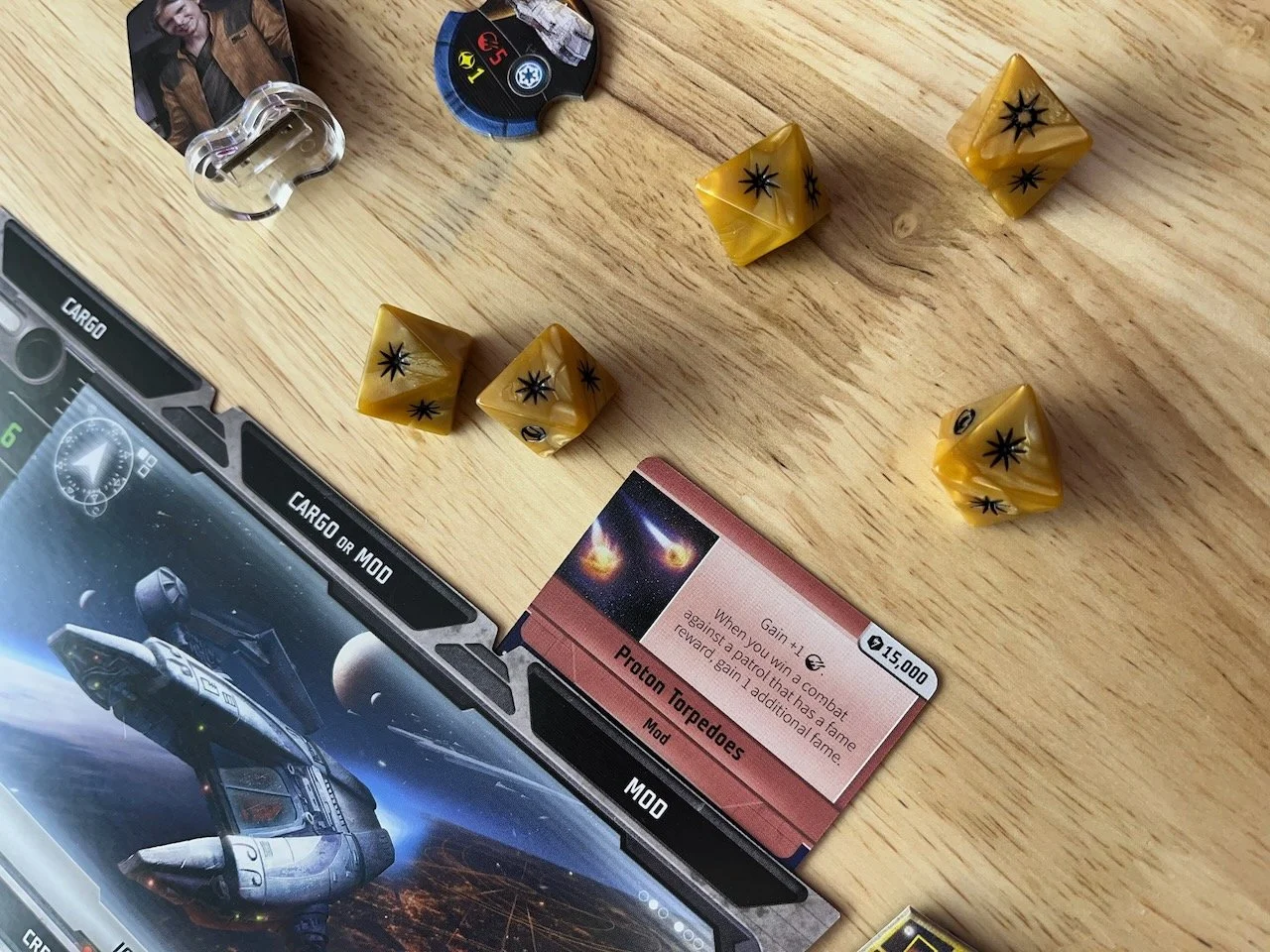
Star Wars: Outer Rim Solo Session (Han Upgrades to the Confetti-and-Bicycle-Horn Cannon)
I met and got my ass blowed off by a wide variety of patrol craft during my most recent solo play of Star Wars: Outer Rim.
This is adapted from the script of Episode 97, “Sykes-Picot Plays With Colonial History (And Dry-Erase Markers)”
Despite being buzzed and rusty with the rulebook, I played most of a game as Han Solo, racing for fame against an automa-operated version of Lando Calrissean. I had my first decent stack of credits in the stashbox of my stubby, entry-level starfighter when I got a chance to buy an Aggressor-Class Assault fighter.
They wouldn’t let Han test-fly it because he was drunk, but when he woke the following morning after having passed out on one of its nacelles, the path forward was clear: He no longer had to worry about bounties or cargo or any of that bullshit. He didn’t even have to talk very much to the one crew member he acquired — a sullen Black Sun agent whose mealtime noises were simply distressing.
He had just become a ship-to-ship hunter. Any job that featured this kind of combat was the one he wanted. And if those gigs were scarce, he could just start turning his guns on any of the four NPC factions’ patrol craft.
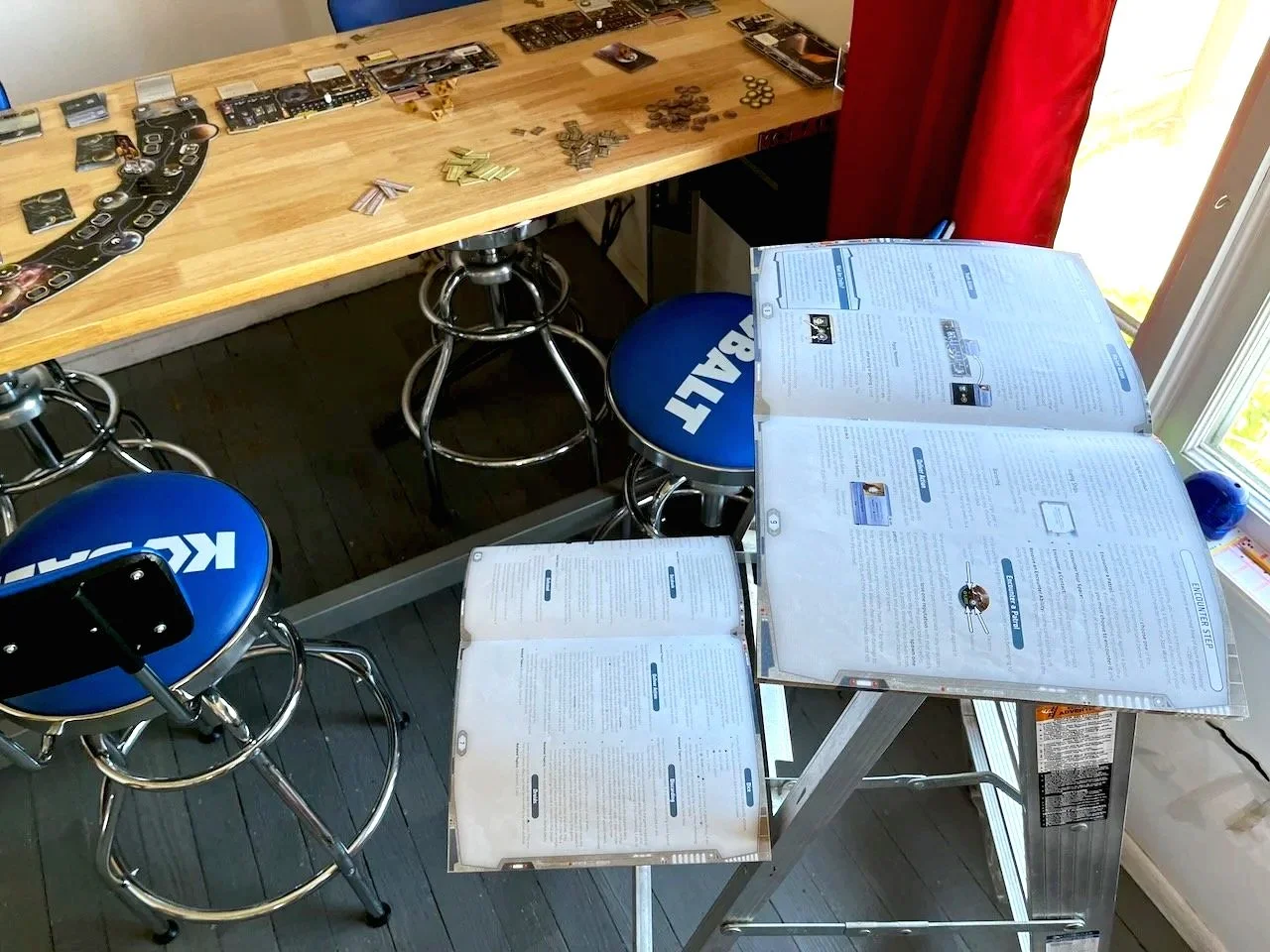
Star Wars Outer Rim Solo Mode: Shit got serious and I had to break out the Rules Ladder
Which he did. Han cleaned out all the Hutt, Syndicate, and Imperial Level 1 patrols on his side of the board, unconcerned with the reputation loss; as long as he avoided planetside entanglements, he was in his lane and keeping pace with Calrissean, who skimmed planet to planet glibly dropping off cargo and buying points on the fame track like the two-faced degenerate he was. With the guns on that fighter, I could keep pace and simplify the game immensely.
Han picked up some Photon Torpedoes along the way, increasing both the amount of combat die he got to roll and the Fame he’d get for making a kill. He quickly upgraded his bird to the IG-2000 version, which had a Long Range Ion Cannon. With this toy, he could smoke patrols without incurring reputational loss, which generated a chuckle or two: Ambush a Syndicate pilot then brazenly land on a nearby planet under Syndicate control for gas. Listen to the heavily armed port boss mutter about somebody taking out their patrols.
HAN SOLO: Really? Gosh, that’s terrible!
PORT BOSS: Say, are those Long-Range Ion Cannons on your craft?
HAN SOLO: I don’t know. Probably. Which way to the bordello? I want to drift off tonight as the middle layer in a pile of rented flesh.

Star Wars Outer Rim Solo Session: Han Solo picks a fight with the Outer Rim’s version of Baron von Richtofen; look at all those goddamn hits
Han Solo had a clean line to the finish, that is, until the Level 2 and 3 faction patrols rolled out and my dice went on an extended strike. I couldn’t generate hits and kept having to limp around getting repairs because my fistful of dice would not perform.
Han lost a duel with an Imperial patrol. Then a Syndicate Class 3 craft. He pulled a job that let him attack Calrissean, who thankfully still had a crappy little ship at the time. Lando took his L and started racking up deliveries again like nothing happened.
One proper ship in my sights where the energy weapons could find their mark. That’s all I needed. I could still close it out in one strike while Lando hovered near the winning 10-fame mark. And I lost the dogfight again. I hadn’t generated more than three hits in any single dogfight down the stretch.
This carried over into Saturday afternoon and I was hung over, looking at the field of pieces and markers, wondering if solo Outer Rim made the cut.
You know people and their desert island boardgame lists? I succumbed to oddball visions of flight, like thinking about what I would have in the rear compartment of a reasonably clean used SUV if I was forced to sell my little shack and become some kind of Johnny Appleseed who sprinkles board game pieces and hangovers throughout the Interior West. Is Star Wars: Outer Rim in the small pile I take with me? Because I figure part of what makes the gambit work is to look like a carefree tourist and not a car tramp with a vehicle interior that looks like a curb in front of an apartment building after an eviction.
Looking at the game with dried-out morning eyes had me crankily zeroed in on a very important ratio: How did the fuss of setup and board management weigh against the flavor of the experience and the stimulation of the decision space?
In this view, solo play dropped off the menu. Yes, I keep the game in the back of the SUV because a) I’m not ready to ditch an $80 title after just four plays and b) on the odd night I got a hotel room and found myself in the lobby with some tipsy nerds, I could break it out because my multiplayer sessions with this one really crackled.
But the fuss-to-fun ratio isn’t the only criteria. I have Unfinished Business, the expansion for this game that seems widely admired on comment threads across the galaxy. It adds new dynamics, characters, ships, gear…so I’m going to re-read the finer points of the solo rules I misapplied when I was in my cups and see if it adds any depth before I just start reeling off verdicts with a hangover.
I’ll get back to you on that one.
Avalon Hill Squad Leader: There’s More to Scenario 1 Than I Thought
I thought I had Scenario 1 of Squad Leader solved. But in Stalingrad, Scenario 1 solves you.
This is adapted from the script of Episode 97, “Sykes-Picot Plays With Colonial History (And Dry-Erase Markers)”
With a couple early wins — one as the Germans and one as the Russians — I arrogantly assumed that Scenario 1: The Guards Counterattack from Avalon Hill’s Squad Leader had shown us everything it had.
But a fateful die roll showed me I was wrong. I was pushing to move ahead to Scenario 2, which adds deadlier support weapons, a bigger battleground, and other wrinkles. Noisy Andrew rolled a die to determine if we replayed Scenario 1 or moved on. We stayed in the training dojo.
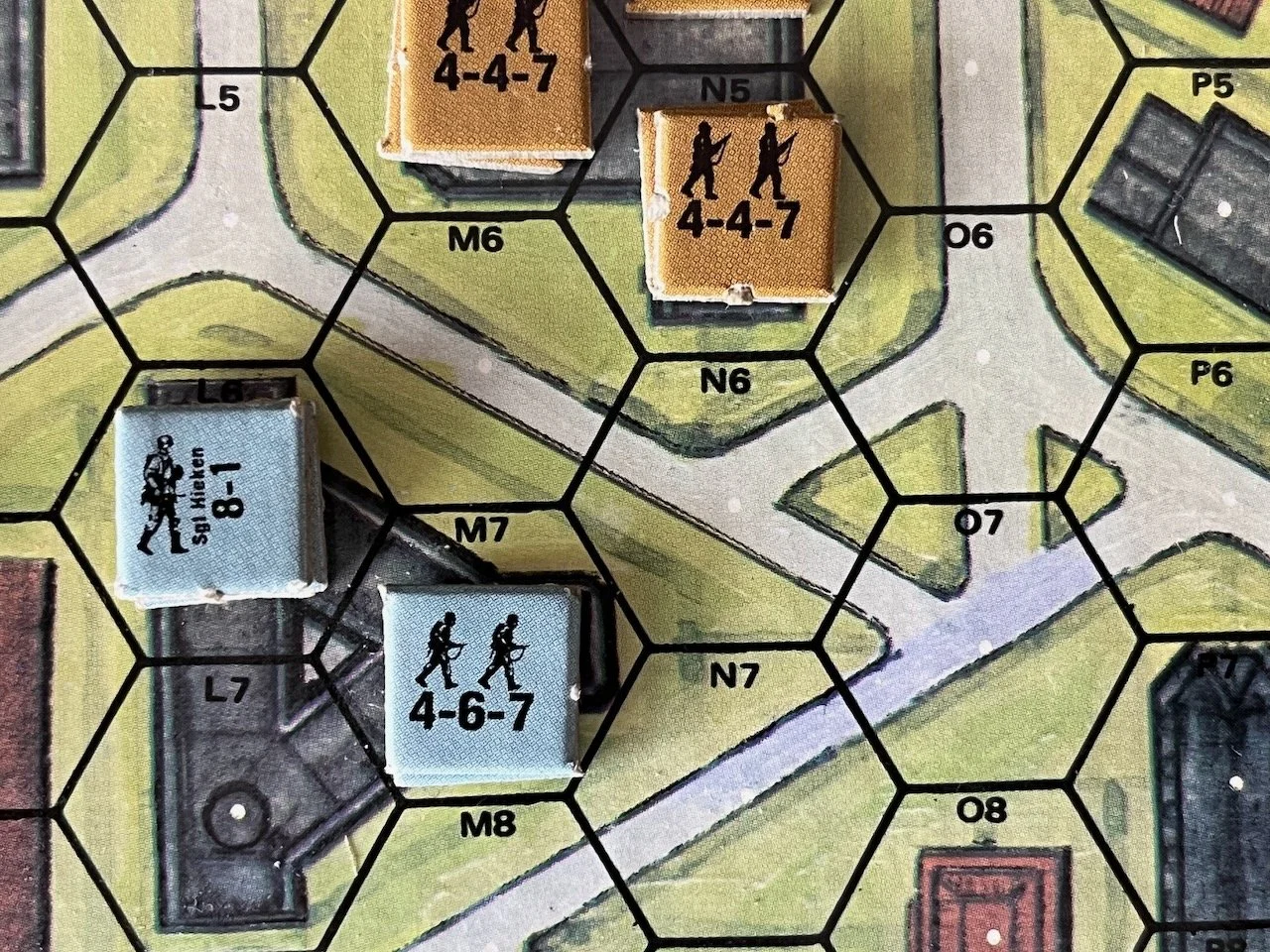
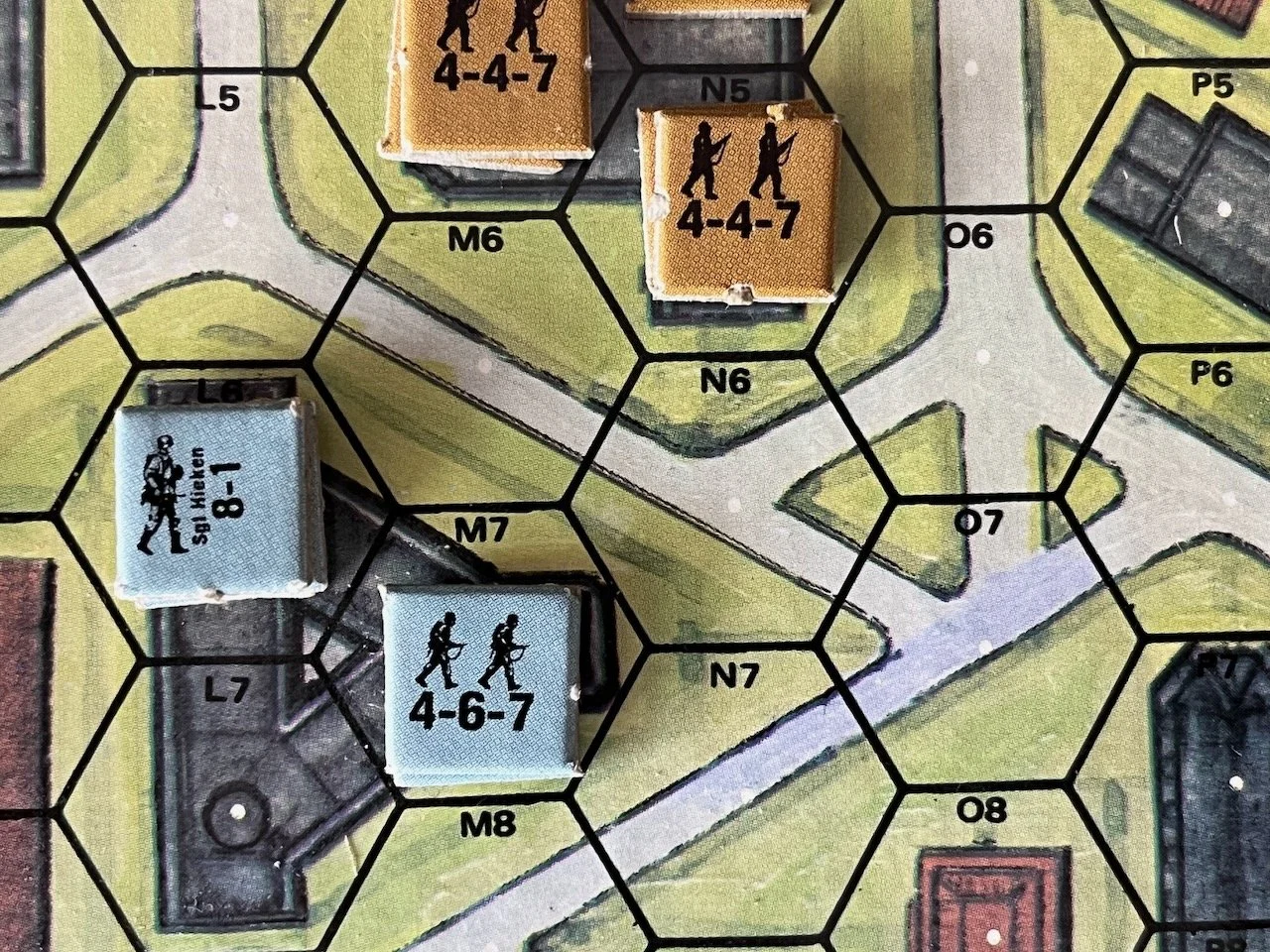
Avalon Hill Squad Leader Scenario 1 - The Guards Counterattack: The Guards are about to do some dumb shit
To keep myself entertained — it was my turn to be the Russians again — I did a bit of meta-roleplaying. What if I discarded my usual mindset?
I’m a naturally cautious player who wants to take risks only at the edges. I get anxious at the thought of wagering the big stacks on the table. But this time I decided to start throwing haymakers the first chance I got. Oh, my. A different game appeared. The usual simmer of ranged exchanges and late rushes turned into a rolling boil of wild scenes and tough calls.
Consider this sequence: The Russians only have one support weapon for this one, and it’s in the hands of an OK commander and a single squad who starts the game at the top of the board. His most obvious job is to direct that gun and make the Germans in the nearest building rethink their whole shit, which his squad does early with some fine gunnery.
The next turn, I rush everyone who I think will survive the first wave of German defensive fire. Commander So-and-So and his squad lug the gun out into the open, practically staring into the windows of a German-occupied building. The German commander in that building mans a light machine gun himself because his squads are all broken. It would normally be a long-odds shot because officers in this game should only jump on a support weapon by themselves if there are no other options, which there aren’t.
But it’s a point blank shot and I’m sitting out in the middle of a road. His volley breaks my one squad. They run back to the house! Leaving So-and-So sitting there with the gun all by himself!
Two can play that game. The Russian officer cusses and racks it up. His point blank Advance Fire kills the broken German squads inside the building. It’s just the officers now. I use my Advance option to push the Russian officer right onto his position, pistol drawn. It comes down to one heads-up roll. My officer is killed. Hopefully the sniveling dipshits who ran away saw the example and will remember their duty to Mother Russia the next time the chips are down.
At the same time this is happening, my 37th Guards take a building to the west at great cost, smashing the forward German position, but immediately coming under heavy fire. Squads are breaking left and right because while they’ve taken the building, they’re now fair game for the Kraut’s well-rested reserve positions, one of whom somehow manages to break or jam all three of their machine guns in the span of a turn. (This gutbuster is probably why I’m still even in this one.)
I still have to take a building to win the scenario and I’m running out of guys to do it with. Just one hard push and it’s a different game, more contact, more lines of sight, more decisions and drama radiating out of every hex.
As this gambit stands now, my Russians are into two buildings, but they’ve fought themselves to depletion in the face of German counterfire — and that superhero German officer who bashed my officer’s head in with a heavy glass ashtray is still in the second building, waiting for another of my commanders to close distance.
What a thrill. What a scene. I love being wrong about stuff.
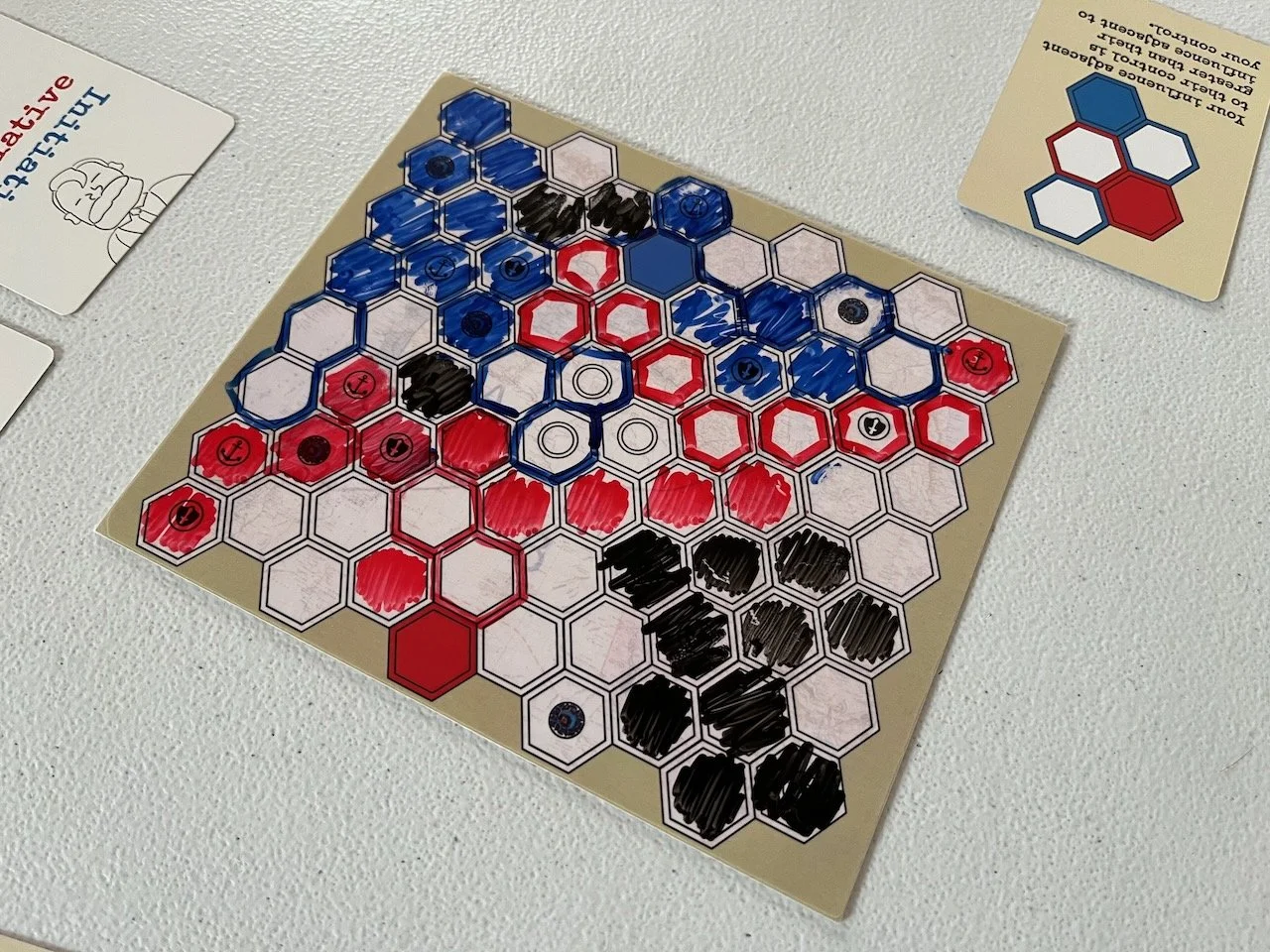
Sykes-Picot First Play: I’m Glad I Can Erase This Awful Mess I Made
I did a coloring project and congratulations, you now live in *checks notes* Iraq. My first play of Sikes-Picot: The Secret Treaty to Partition the Ottoman Empire from Hollandspiele.
In the critical media coverage I read extensively in the buildup to the 2003 war in Iraq, I remember learning that one of the many foundational problems was that Iraq, as we conceive of nation-states, had been sort of made up at the tail end of World War I when France and Britain took out the red and blue pencils to decide who would administer what. The “what” being hastily drawn “countries” whose lines did not take into account the cultural, tribal and religious landscape they were marking off. It was a powderkeg that exploded in a 1920 revolt and has been a-sploding ever since.
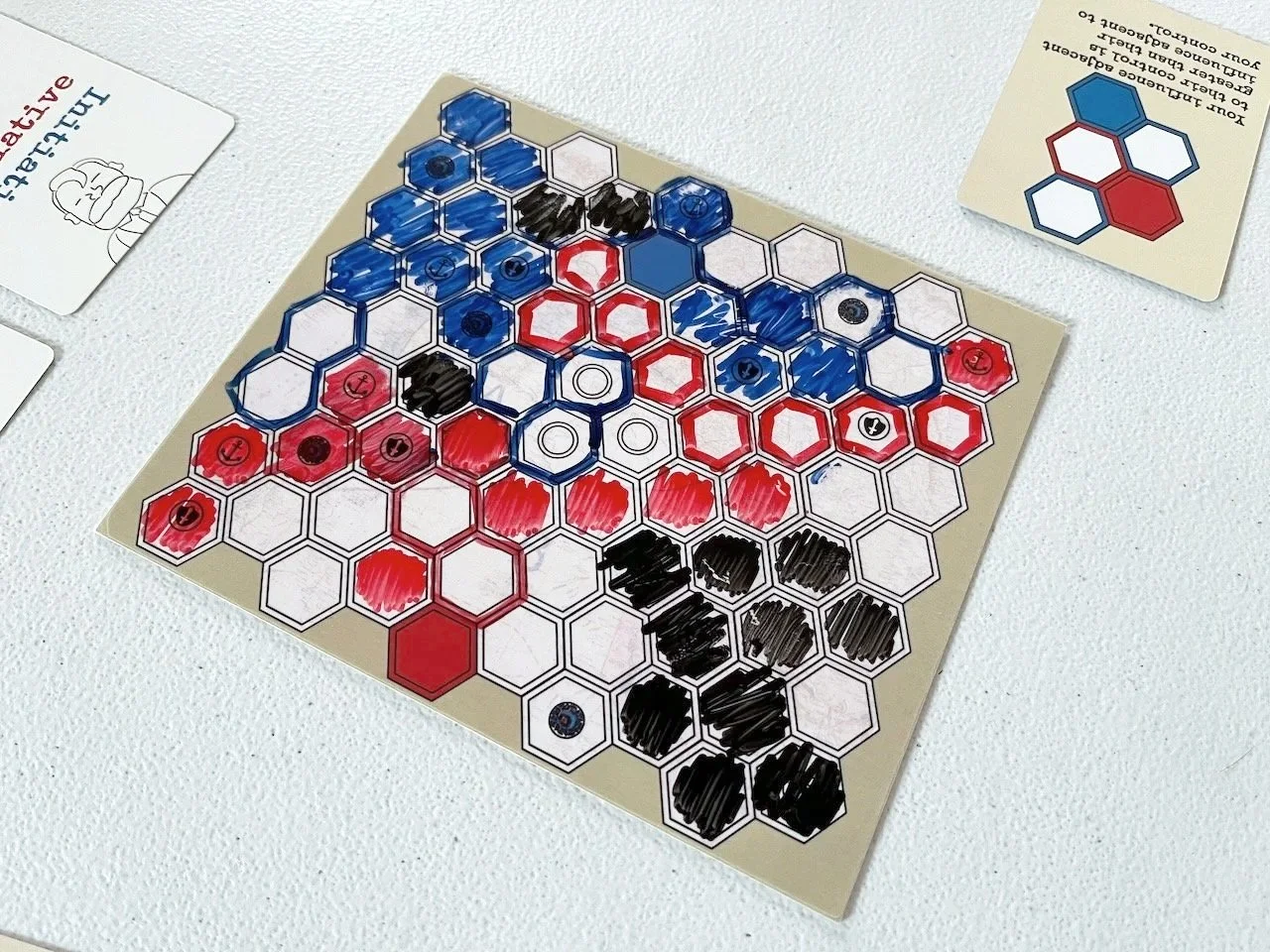
Sykes-Picot: The Secret Treaty to Partition the Ottoman Empire from Hollandspiele Games; the state of the board after two turns, with red territory (Britain), blue territory (Franch) and black territory (international control) indicating that we’ve probably already made a hash of things.
The diplomatic point men for this imperial Turkey carving were Mark Sykes on the British side and Francois-George Picot on the French side of the table. You and your opponent sit in the roles of these two men; you even get red and blue markers in the box and a dry erase board as you duel to lock down key shipping, strategic and cultural zones.
The mechanical piston that drives this duel is a trick-taking card game: Both the winner and the loser of each trick will get to change the map in some important way, because colored hex patterns appear on every card. There’s the straight-ahead possibility of leading high to simply make sure you get to influence or control the big group of hexes on the winning card, but the player who loses the trick gets pick from a menu of options that allow them to subtly improve their position or degrade yours, because — and this is an interesting touch — whoever executes a hex pattern does it in the color indicated by the card, not necessarily the color of their country. So you can tack some pretty bogus geometry into the middle of the opponent’s scheme.

Sykes-Picot: I’m playing as the Brits, but almost all the card effects from my hand have the potential to expand French influence or control. Or I could put that two of stars into play and risk some of the board falling into international control.
I first encountered this win-a-trick-you-need-but-set-off-an-effect-you-don’t-want design touch when I messed around with The Fox in the Forest a few years back. Here it was again, except in a starched collar, hiding its smile behind a raised porcelain cup as you quietly colored in everybody’s next long-term problem.
Keep in mind I’m talking about some of this action speculatively. I made contact with game designer Brooks Barber on Discord when I hailed a game design group asking if any of them had a title available I could look at and talk about. He raised his hand. Ta-da. A title from the maverick and inventive Hollandspiele imprint no less, which I’ve been overdue to sample.
Except in my enthusiasm, I forgot that moving to this part of the world made me a solo player. My opponent crapped out after the second round. (See: Hazards of external dependencies.) A bit of intention, curiosity and focus across the table is so critical for a two-seater game.
Sometimes I feel like a goddamn child who can’t remember anything, thinking I’m going to buy some “magic game” that’s going to create interest where there isn’t any, like I don’t have the dusty carcasses of previous multiplayer titles stacking up in the spare room. You think I’d learn.
Anyway, what I’m talking about here are intriguing things where my limited experience seems to point.
For one, that dry-erase board was filling up fast. The cards used for tricks get removed from the game. It was easy to see how two people could grind their teeth quite a bit playing this as a straight-ahead competitive area control game as the board closes. The diplomat who can track and analyze the dwindling possibilities could make their opposite’s life pure hell.
Except: The rules also suggest more fluid spaces to feel out. There are rules for negotiation — a dimension my exhausted playtester and I never even tried as we were just learning the basics. OR: As the designer also reminds us, you can also choose to play cooperatively.
Would that include, for example, using the abstracted dry-erase board to see if you challenge each other to fill it in while leaving key cultural sites alone? There seems to be explicit permission for creative subversion, a chance to play in an imperial sandbox without being bound by imperial logic. Unfortunately, the intriguing nuance of Sykes-Picot will remain hidden from me as long as keener opponents do. It is my hope to explore this fascinating and tragic duel again.

I’d Rather Die at My Game Table Than Live in Your Office
I hope you spot the little cluster of stars you want to tack to with less waste and sorrow than it took me to spot mine: Documenting the rich vertices of tabletop play and hard work.
I apologized for the beercans, my beard, and everything on the floor
and pretty soon everybody was yawning
and the editor suddenly stood up and I said,
are you leaving?
and then the editor and the poet were walking out the door,
and then I thought well hell they might not have liked
what they saw
but I’m not selling beercans and Italian opera and
torn stockings under the bed and dirty fingernails,
i’m selling rhyme and life and line,
and I walked over and cracked a new can of beer
From “I Am Visited by an Editor and a Poet” by Charles Bukowski
I got invited to a couple things here and there this week, but it’s just too hot to have friends right now.
Even pleasant acquaintances drain off the strength I need to prop myself up against the oversight of that middle manager, the sun: Peeking in the front of my house trying to see if I’m getting ready for work. Hovering around all day wearing me out before one final, enervating blast in the evening that says: “Don’t worry about it. You’re tired. Just watch TV and be ready for me in the morning.”
Fucking bastard. I’m pretty sure the sun voted for Trump.
It’s also too hot for flavors. I get an 18-pack of Michelob Ultra at Wal-Mart and put it on ice in a cooler next to the couch because it’s too hot to go the fridge, too. Gonna have me a little dirtbag beach party and edit far into the night.
That afternoon I finally got the scathing dining room haunting scene drafted in my third session of Dwelling, a solo RPG for ghosts, after a week of avoiding it…and realized there were still hours of fine-tuning, formatting, cutting the audio, and editing that, too. So I got a rank of aluminum soldiers for the final push.
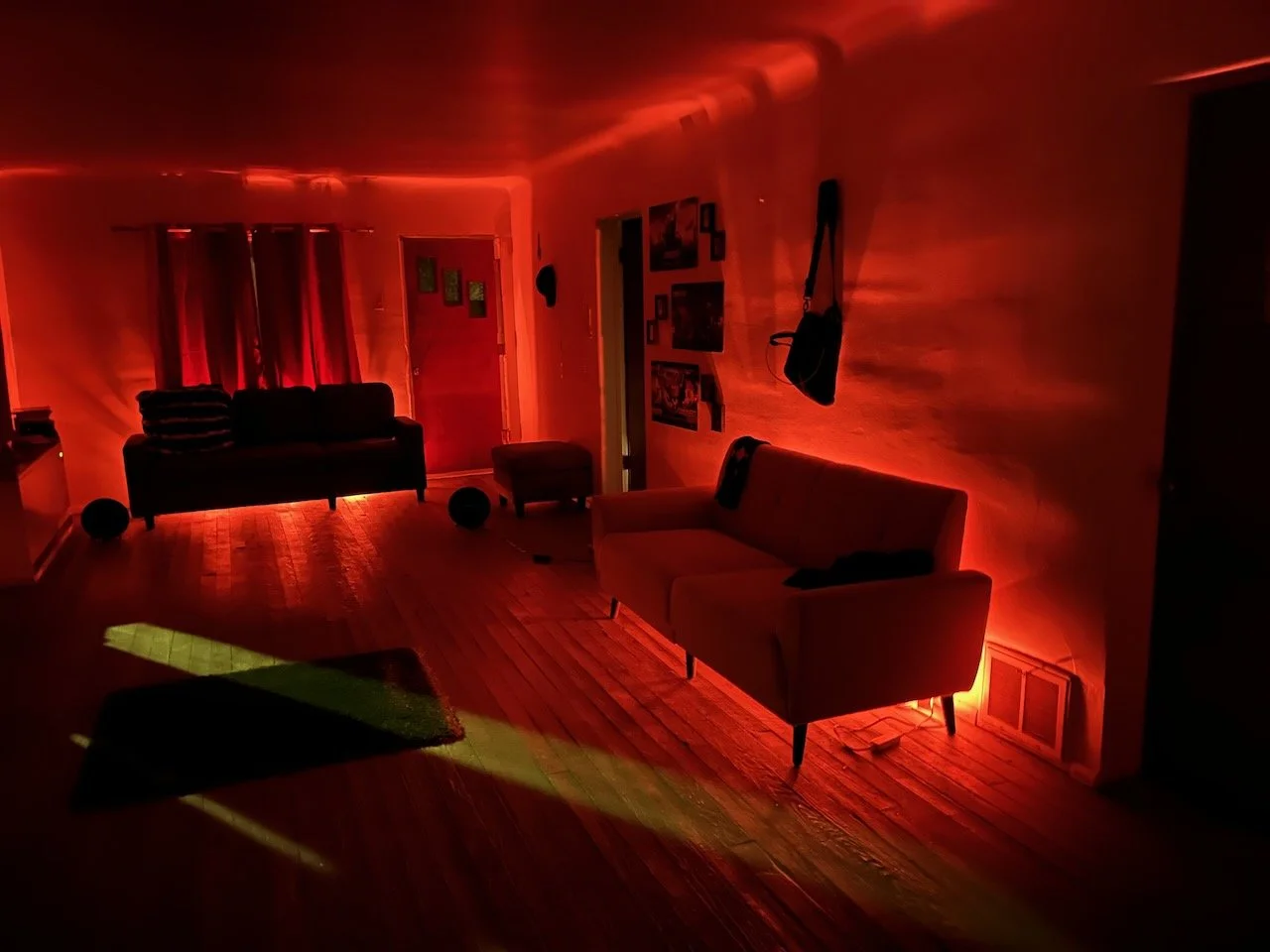
The lab
This Dwelling session was probably a full 24 hours of pure work spread out over the weeks, which has me thinking about an encounter from a few years back: A local who I had over for dinner a few summers ago.
I was mixing up Bull Shots for him while the charcoal heated up. In the course of trying to sell me on some local open mic events — which drive me into a rage — he pursed his eyebrows at me like he was a college dean trying to help a struggling student and asked: “So I’m trying to get a sense of what it is you’re interested in.”
In the previous weeks, I’d sent him links to my best episodes and blog posts, including essays and fiction. I’d given him collateral that l made with the help of two of the best graphic artists I knew. I’d also invited him and his friends to learn a couple of the more accessible games I love.
“No takers,” he told me a week later on the eve of the game night. Just the two of us, I thought. That’s OK. I had a solution for that. I showed up with Patchwork Americana, a gently themed two-player game that can be successfully taught even to people in a coma.
Except there was another attendee: A friend of his from down the block who appeared in the kitchen and loudly announced, “I’ve never played a board or card game in my life and I never will,” like he’d been practicing on the sidewalk the whole time over. I didn’t have a solution for that. Nothing I’d told my new friend about what I love or why I work at it had registered. I checked off his street address as a dead end.
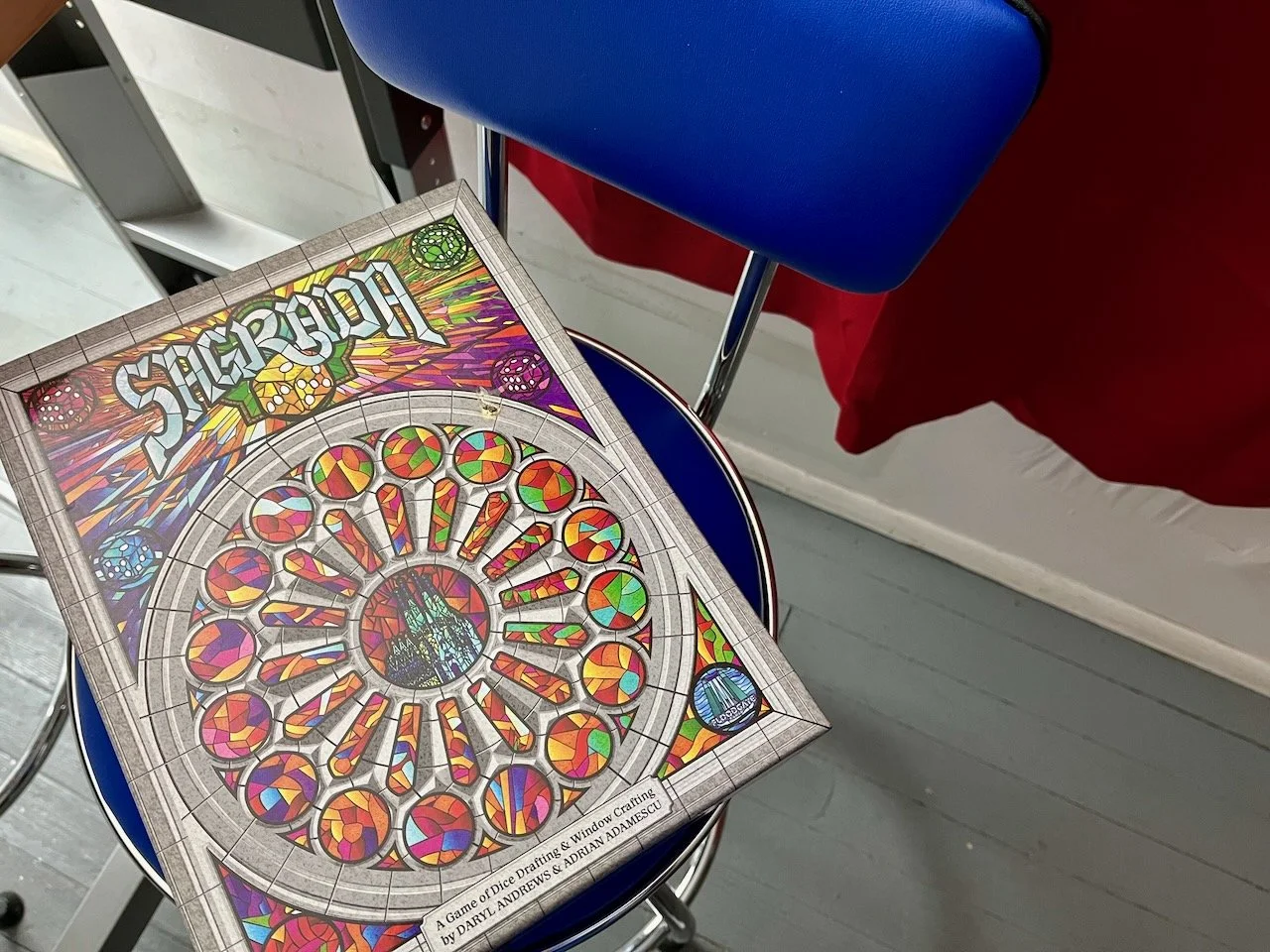
It means “sacred”
This string of encounters gnawed at me. In the aggregate they pointed to a personal challenge I’ve never squared up with: Could I articulate for myself why I’m ready, in what should be the threshold of my Golden Years, to rip up every other single thing in my life and use it as kindling for just one more night at the table or on the mic? Can I try my twin justifications on you real quick?
Pillar #1
Being around a board game table is the most beguiling alignment of the social, the cerebral, the rational, the tactical, the tactile, the aesthetic, the participatory, the received and the intuitive — all bound up in pure entertainment and comedy and snap psychological studies that both locate our unique vantage points on contemporary culture alongside and inside the kinetic world of the game. And if these vertices aren’t juicy enough, marvel at the nourishing bedrock: Our shared instinct for the most beautiful of the human afflictions — the need for organized and intentional screwing around.
We’ve been in this grip for millennia: Can you get that rock through that hoop? Nice! Now what happens if three dozen of my friends try to kill you when you do it? If you die, that’s like, minus five points. Or let’s scratch out some kind of arena with a stick in the ground and see if I can end up with more of your stones than you can have of mine. See, I won and you didn’t even have to die. Damn, it’s raining. Maybe we should put this on some kind of board. Etc.
Board games to me are as worthy of study, love and even obsession as any of the great art or technology. They’re my lab, my temple, my library and my playground.
Pillar #2
Sometimes before a nap I imagine I’m in the cockpit of a B-25 Mitchell fitted for interstellar flight, pushing straight for an asterism in a faraway cluster that you can only see if you unfocus your eyes and look at something else. What else was I looking at before this?
My whole life I wrote for survival, for flashy extras, the cheap pleasure of being the guy with a Brioni tie who picked up the bar tab, for social validation and feedback weighted with what I now see was a misguided quest for heroes and corporate dads, the delusion of having a seat on somebody’s rocketship or getting to author a chapter in a great story that everybody knew. Between 2007 and 2010 I lost my primary income something like six times. I wrote for fear. I wrote because I didn’t know what else to do.
But something changed when I got down to Starkville. None of my fantasies about this place materialized. The war chest drained out. The house deteriorated. The car committed a series of expensive mutinies. My network, to what extent it still existed, got tired of my schtick.
But somehow I kept putting out episodes. Last summer I rededicated myself to better frequency, scripts, and audio, and realized I had accidentally framed a home for all the little professional tricks I picked up at the newspaper, the startups, the small agencies. I committed to being my own best client for the first time in my life.
Personal finance is a game I lost decades ago. Like the thing in my garage of which I only ask short errands, my body is an expensive machine I know I can’t afford to keep. I got rid of my first tooth ever in May. $750 for a crown? Fuck that. I had it yanked. I think of this first sacrifice whenever I catch myself tarrying on an episode. I think of the tooth and the awful morning when I look in the mirror and realize I didn’t heed the slow boil of failing systems and I’m now one of the grayed-out NPC aging bachelors of the desert, shopping cart full of processed food, hunched, wheezing, deracinated, desexed, fly and jaw open.
Look for contract work? I wasted a year and a few hundred dollars on Upwork in between reading my LinkedIn feed and feeling the other creatives standing next to me with decades’ worth of better portfolios, better attitudes, improvised weapons in hand, circling that bright can in the rubble marked The Last Job in America. Or I could barrel into what I’ve started and see if it leads somewhere more interesting.
At the very worst I can say I gave my best to a body of work that finally used all my skills, taught me some discipline and gave me some pride. At the very best? Maybe if I keep putting my head down and doing the right thing, I’ll meet a different breed of opportunity through this big door before me, deceptively labeled: Play. I’m wagering everything I have left on finding out.
There’s nothing quite like finishing a paragraph at the same time as a beer and hurling the empty across the living room. I got in over my head when I bought this house, but my retreat from its general decay to the rectangle of this room, 29 feet by 13 and change, is a success tonight. Everything I need to do what matters is here.
Give me time and the right rectangle where I can think and see...it could be the rectangle of the frame holding the first Van Gogh you ever stood close to, your breath catching when you got to see how he mixed the colors and where he laid it on with a fury.
The rectangle of my work table that holds the rectangle of the game board, through which I see the slowing and erasure of time, the completeness of self-forgetting, the mind in dance with a story and a system and the last of the people I want to call friends.
That’s what I wanna write about, and I hope you spot the little cluster of stars you want to tack to with less waste and sorrow than it took me to spot mine.
It’s late.
Tomorrow the sun will rise with a Palantir logo on it.
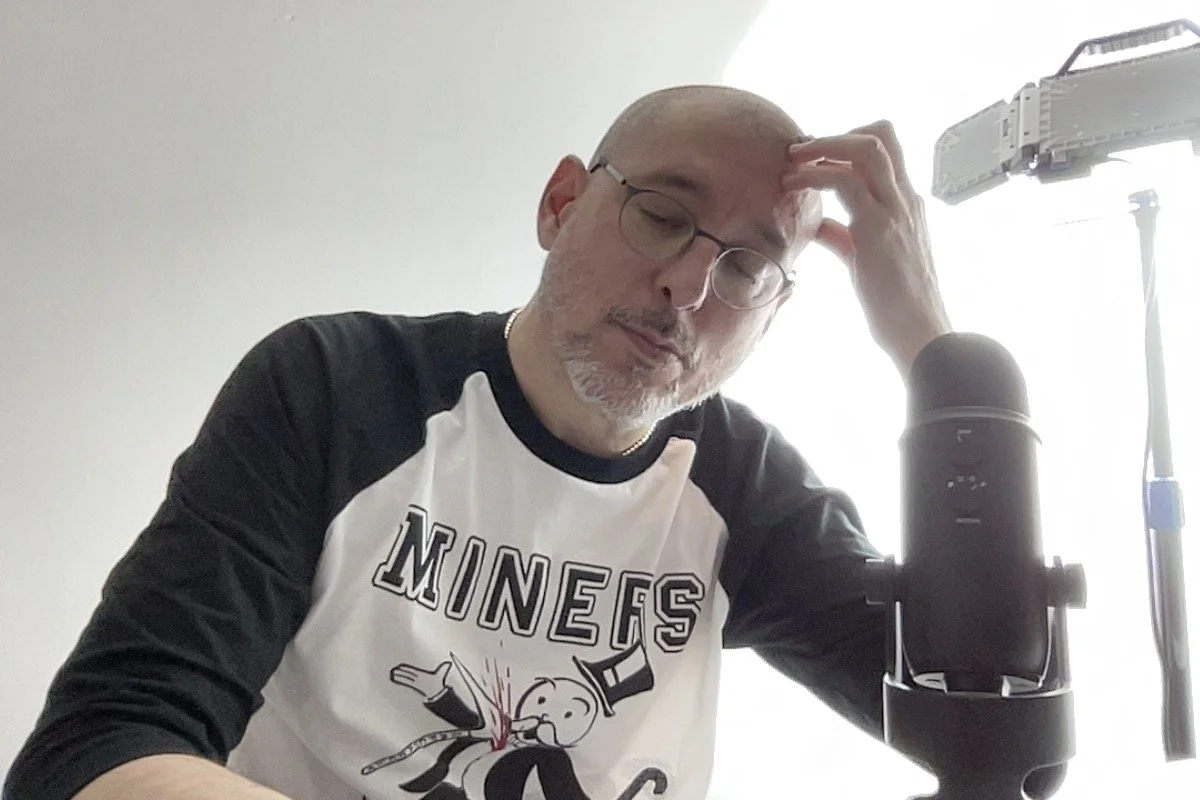

Dwelling Solo RPG Session 3: The Honey-Chili Heart
Probe the temperature of a chicken and ambient human anger with the ghosts of the Dwelling solo RPG. Session 3: The Dining Room.
DINING ROOM
In this scene, the narrator wanders into the dining room to check windows after his living room encounter with a spectral ex. There is no draft, but he’s stopped cold when he notices the dining room table is set. He is compelled to sit. From the prompt on page 32: “I can feel the presence of others. Far away, but pressing into me, in the moments it takes me to look up and around I feel surrounded, as if all the empty space around me summoned long-reaching shadows to fill it. In each seat is a tall looming presence, jutting hands that cut at empty plates and reach across the table and over my head, prodding into one another, the tangle of limbs cutting off my view of anything else.”
Summon
I am pinned in the chair. At my right, at the head of the table, a restless and nauseous form. Across the table from me, two more shadows, smaller and stiller. They extend themselves, gingerly exploring the surface and the dishes. I know a roast chicken and a basket of cornbread by outline only in the room’s borrowed light, but the arms evaporate from the distal points inward until the figures are neat columns at right angles to the floor, in abeyance to the writhing night geometry of the thing to my right.
The groans from the head of the table are constant: ohhh what are we going to drone about today at the book club, those stacks of baked dog turds on your desk, you don’t need an editor you need a priest
The being at the head of the table extends out, its shadows crossing us, prodding at the plates and finding no satisfaction, spinning a butter knife crooked.
you don’t trust people like that with their energy and becoming and presence talk, people like that are either sick or lost or they’re hoping whoever’s listening is sick or lost
Worst of all is the contempt I feel. I am disgusted with the mute pillars across the table. This is the most shameful of the obscure family of emotions.
you’re all terrified of writing a single thing except ira, he knows what he’s here for with that yogi smirk putting his chin up in the air with his thumb like this, why don’t you just write your next draft with his dick in your mouth, that’s the breakthrough everybody’s waiting for
It stretches a pseudopod across the table. The band of its shadow thins with the effort. It grabs the chicken shape overhand and lifts it up and I gasp. Against the wash of grays the chicken now hovers at center, full-color and wet as a human heart. The red chile-honey bird implodes here, bulges there as it is squeezed with great force; a leg quarter thumps on the tablecloth, the crisp skin crumples. It finds something it’s looking for in the dorsal, scoops it out and lets the rest hit the plate. In the low light I can’t see what it throws, but the rightmost shadow across from me ripples violently.
here have it its the oyster you love the oyster here stuff this in one of your paradigms
I feel a hand clamp my forearm: “Have you been drinking?” and panic turns me to stone.
Memory
On page 33 of the book I’m prompted to compose a memory, so I took the liberty of using the kitchen for a scene so we could see, at least in part, what led up to the horror in the dining room:
It started out as fun, at least for the boys.
“What we’re going for here is well-constructed comfort food,” J said, putting an extra splash of vodka in my half-full screwdriver. “I need you in a mindset conducive to training.”
It was the the second screwdriver I’d ever had in my life. The first one 10 minutes prior. The elation: having J to myself, the field promotion to kitchen assistant and a rocketing sense of confidence and well-being.
It was easy to drink and it climbed all over me. I decided I very much liked the way my shoes looked against the kitchen floor. They weren’t so beat up or ugly after all, they were ready to dance me far above my station. My shoes were cool and had me planted at the global nerve center of a cynosure that drizzled honeyed success over all who could witness or imagine it.
If AB could only see this, the phone back in Aurora would ring at 10:35 p.m. Her voice would be soft and curious.
“Here, here, see…” J planted his shoulder against me and nudged me along the counter, undoing my sloppy string and beginning again. “Once you start dating more interesting women, you’ll get better at this.”
I caught the joke, tried to tack one on. Typically a good try would get a knowing hmmm that was all in the throat. A laugh, never. I didn’t care if I could cook like him, but I wanted to riff at his level very badly.
“Is Jason going to be able to make this for us at home now?” A delighted Mom face was poking in the door.
“He’s already been scouted once by Arby’s and the Joseph Mengele Culinary Institute,” he purred absently. He ignored Mom’s reprimand and continued amusing himself with some patter to the chicken, smoothly looping the string and tightening. “‘I’m gonna finish you before I’m through with you…’”
I failed my way sideways to other prep jobs in his kitchen. He seemed more amused by my increasing intoxication than my comedy bullpen skills or the battered LL Cool J tape I dug out of my duffel and put on. I tried to show off how many of the rhymes I knew and explain other Def Jam artists. When I thrust the cassette case in front of him, all he said was, “What’s he planning in that hat.”
He had big brown eyes like my Mom that you could read for sensitive if it weren’t for the default expression of mild surprise and boredom that never quite tipped to either. He was tall with a solid medium build and dark curly hair that he left a little longer in the back, but tightly trimmed.
At least once every visit, he’d have us to Genevieve’s, one of three restaurants at the golf resort and hotel where he worked. It always surprised and intimidated me, that exquisite little city appearing out of the woods, which would have remained hidden without J having us in, usually during the tail end of a weekday lunch.
He’d appear in his black chef’s jacket at the kitchen door, directing the waiters with whatever it was that he had, that thing that was coiled in reserve that let him command an entire dinner without being fazed by or invested in any of it. He’d show up with the courses for sly lectures and sit with us late in the meal for a glass of wine once he had the back-of-house crew on track for closing. He might as well have been a decorated war hero to me.
When we went to eat at other places — he always chose — that’s when he’d play, usually at some poor server’s expense:
• Pointing at the menu: “Has this lamb ever faced extradition?”
• Sharing notes on the shrimp during the server’s table checkin: “These taste like dried coat buttons.”
• Resting his knife and fork parallel on the nearly full plate as the manager on duty froze with distress: “This…has no merit.” Mom’s lips pursed in a solemn way at that one. J and Beverly fought about it on the way home.
The lark in the kitchen ended when he sent me out with the blue-and-yellow cornbread with specific instructions on how to present it: “The chicken will be ready shortly,” I slurred after weaving to the table. “Right now it is being evasive and smug.”
That was the end of the music and sneaking drinks in the kitchen. It was functionally the end of the trip. Everybody was in trouble.
Mom rarely put her hands on me. Her grip on my wrist was firm this time: “Have you been drinking?”
***
It was 300 miles back home in Mom’s so-so car, staring at my grimy sneakers during the talk that usually comes in the wake of anger. About Dad’s drinking and that being one of the reasons why he wasn’t at that table anymore; another being that he despised J and didn’t hide it well. Stories from their adolescence. About how he treated Beverly. She said he was hovering in the kitchen doorway, his hand over his mouth and his face ruby red when I brought the cornbread out with the triggering phrase from their last big row. My first laugh line from J, and he’d had to write it.
As I looked back and forth between my shoes and the foothills that meant Denver was soon, I quietly anchored myself on one spot: My Mom was a drag; cerebral, boring Beverly was a drag and my Dad was a drag. I was going to be my own kid after this.
***
I snap back to. There’s a greasy blotch on the right thigh of my sweatpants. The murdered chicken is gone, the figures in the chairs dry into the known hues of an empty dining room at night. I feel the blotch in the fabric; it’s an oil that turns into a bigger smear when I touch it. There’s nothing to wipe it on there’s nothing to wash it with…I hold my right hand up, fingers spread out, scanning the table.
I peer at a noise: There’s a soft sizzle coming from the table. No, not quite a sizzle, more like what you’d imagine to be the sound of mycelia squelching their way through poison soil. It’s the slaw, the pepper slaw is collapsing and rotting. I can hear it fall by sections. I get a bulging surge of pain in my stomach. The sound flattens, then moves. It passes on my right. I turn to track it as it gets louder, heading for the kitchen. This movement and nothing else is what will free me from the chair.
Next: The Kitchen

Axis & Allies & Everything Else: A Far-Ranging Talk With Justin Kramm
It starts with a question about playing Axis and Allies as a kid. It doesn’t stay there for long. Breakup Gaming Society meets the restless mind behind Shitshow Creative, Justin Kramm.
With the last year’s drift into more historical wargames, I wanted to know more when a new pal on LinkedIn — Justin Kramm of Shitshow Creative — told me he played Axis and Allies as a kid. This game always felt like a lacuna in my tabletop career.
It was an easy starting point. Keeping him there was not a possibility as I found myself on the line with an incurable raconteur with a mind even more restless than my own.
The act of games and play give way to wider themes as we rove from his childhood as a hotel brat to musings on whether or not we can rage quit 21st Century Capitalism’s End Game.
Following are four selections from a long and interesting ride.
Setting the Board
Hotel Brat
You’re Not Playing Right
End Game

Carving out an hour-plus of your busy day to talk to Breakup Gaming Society basically makes you a contributor, so Justin Kramm (L) shows off two pieces of swag I sent his way: Breakup Gaming Society’s cocktail booklet and an Adventure Comics from 1980something.

Vijayanagara: First Play in India’s Rough-and-Tumble 14th Century
My first experience in the Irregular Conflict Series takes me to 14th Century India with Vijayanagara: The Deccan Empires of Medieval India 1290-1398 from GMT Games.
This is adapted from the script of Episode 95: Vijayanagara Review or How I Learned to Stop Worrying and Love the Bahmani.
So as it turns out, when you’re playing as the Sultanate in Vijayanagara: Deccan Empires of Medieval India 1290-1398 from GMT Games, your enemies, the Bahmani and the Vijayanagara kingdoms, will not sit and behave while you try to beat back Tamerlane and his Mongol horsemen, who show up a few times during the game to wreck your shit.
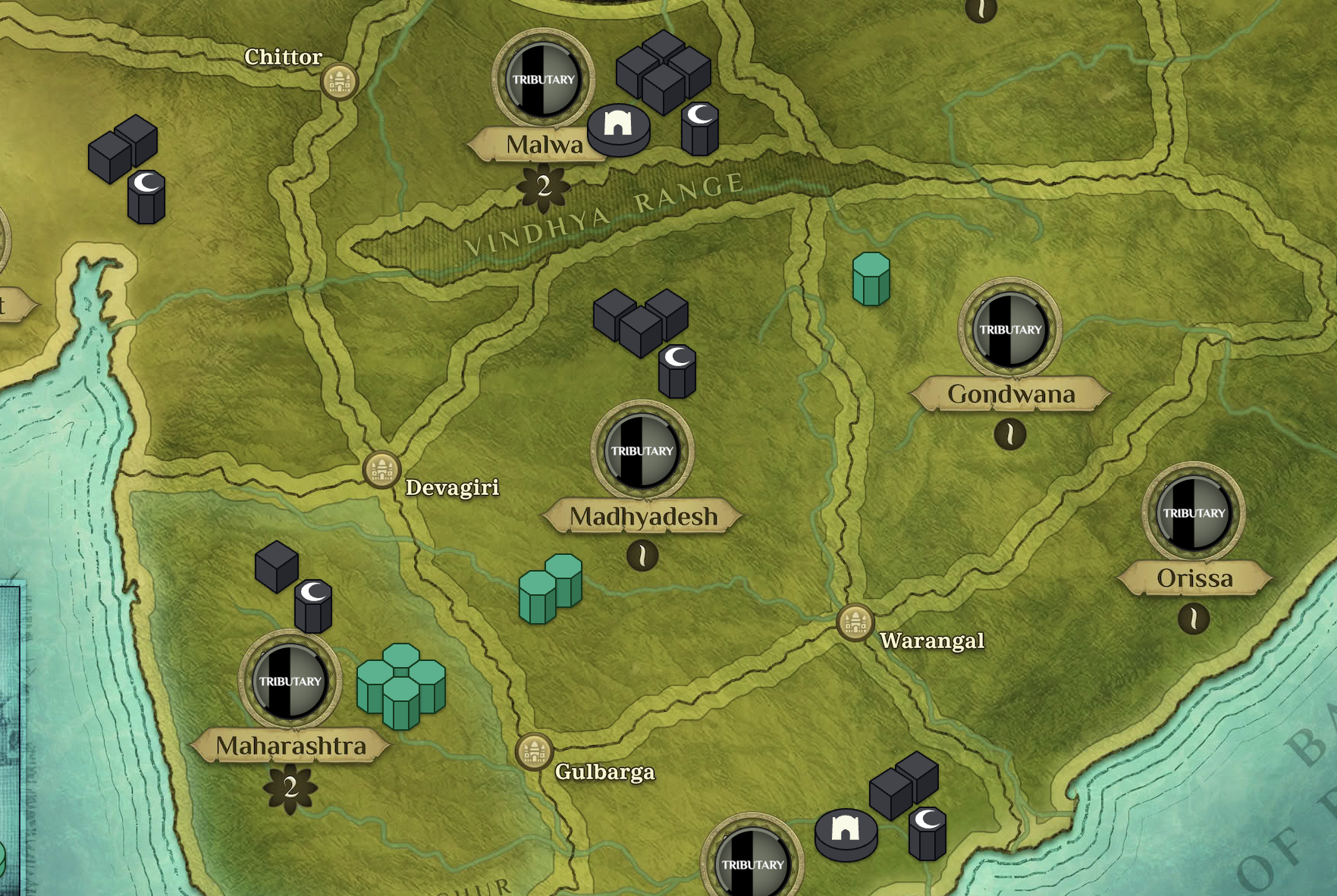
Vijayanagara Game 2: Did I learn my lesson from Game 1? Playing again as the Sultanate, I open by dispatching ruthless Governors far and wide.
The challenger Bhamani and Vijayanagara forces start out the game like small rashes you notice on your arm before you go to bed. Then the iron-fisted bastards who were running Delhi during the opening game give way to a new dynasty, the Rebel command becomes available, and you wake up covered in them.
By midgame, regions that were firmly loyal are answering to new Rajas and Amirs as they build their power bases, pushing north, turning your vassals into theirs, and hollowing out your tax base. Your dreamy days of commissioning lavish minarets and creating fountains of cash from whichever tributary you squeeze are coming to an end.
Vijayanagara is built on a game system called the Irregular Conflicts Series, which is in turn the child of an older system called the CounterInsurgency, or COIN, series. These game systems let you step into a given era of historical conflict and take the part of a major faction or nation in one of these struggles. The game arc can span decades or even centuries in an afternoon.
You will be subject to the major economic, cultural and military inflection points of the time: succession crises, invasions, new technology, and more reel off the event deck every turn: Can you ride the turmoil or be engulfed by it when, for example, the Diamond Mines of Golconda start kicking out loot or when a Sultanate army wanders off into the Hindu Kush Mountains and vanishes? Each of these let opportunists destabilize your position or vice versa.
The event cards, during which each of the three factions usually gets a chance to capitalize, kick off the excitingly stingy ration of actions, along with the opportunity cost anxiety of the game’s action selections: Each faction has its own powerful commands that it can activate to take territory or secure a sphere of influence on the beautiful map, but taking the most powerful options means you’re sitting out the next turn. Do you take a less powerful action in order to stay in the flow or accept the forced cooldown so you can make a bigger dent in the board? It’s not easy. While the Sultanate has a pretty firm grip up north, you share lots of borders with your hungry upstarts down south, and they’re gonna eat.
Plus, there’s the Mongols to think about: the Timurid empire was routinely stomping through northern India and I know they’re going to launch a big assault for the game finale. I have more than 200,000 troops in Delhi and I’m dying to head South into the Malwa District and stomp out the Bahmanis and tear down every brick of the annoying fort they built there, but I feel handcuffed because it’s the home stretch and Tamerlane could pull up on me any minute along with his many, many eager riders.
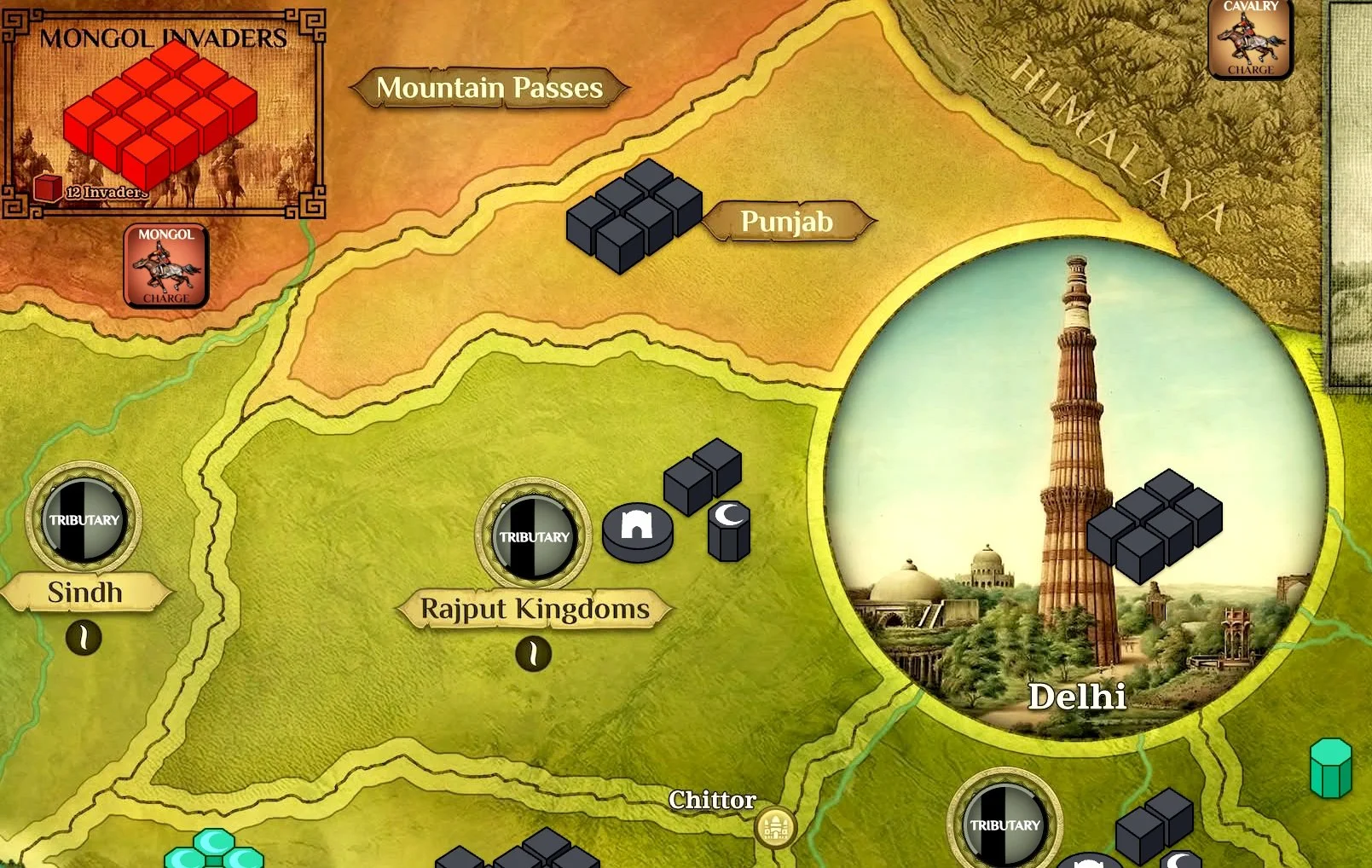
GMT Games’ Vijayanagara: That’s an awful lot of Mongols you’ve got up there. Got something planned, Timur?
Unless I catch a lucky event, it would take me a whole turn to march down to Malwa, and another one to attack. I already spent a turn there executing some sassy Rajas and turning Malwa back into a tributary, but now they’ve booted out by governors in the Rajput kingdoms.
The array of forces in Vijayanagara are never clean. Pieces from multiple factions can co-comingle in a region for several turns, vibrating with menace and potential chaos. More than once I’d log on to take a turn and see that previously compliant regions had erupted into full-scale naughtiness and the game had a whole new face. Imagine a busy lunch spot with one of those big communal tables, except everybody at the table has a gun next to their plate and they’re staring you down while you try to read the menu.
The game is full of moments like this and they get brighter and bloodier down the home stretch: As I write this, the Vijayanagara have 10 victory points, and the Bahmani and my Sultanate are tied at 9. In one sense, I’m on pins and needles; on the other hand, I’m just happy to still be in it, even with my dynasty’s best days, by design, far behind it.
On a wider note: This experience is giving me a taste of those glorious “knife fight in a phone booth” nights I haven’t had since my last games of Chaos in the Old World, Game of Thrones 2nd Edition and Cyclades, when we made that first big leap from Risk’s modeling of “dudes on a map” to see just how deliciously fraught a territory control game could be.
There are some things that solo play cannot duplicate: That feeling of peril and of people pushing against you, triggering three setbacks on any given day when you’ve got the resources to stop one. That sick feeling of watching yourself dip on the victory point track, seeing your opponents openly conspire to clip your wings, and realizing the best you can do is lash out because you wrong-footed yourself two turns ago.
Because we’re playing online via RallyTheTroops.com and our players are in the U.S., Canada and Poland, it can be quite a bit of time between turns. But that’s OK, because being able to pop up the rules and reference cards from my RtT room and do some patient reading is a big plus.
The implementation of the game is lovely. The prompts and highlights the game feeds you on your turn, the game log that shows what just happened, all feels very tight and helps you quickly understand the “what” and “how” of executing a turn, even if strategy comes slowly. I highly recommend taking a look at the collection of games there.
So laurels for Rally the Troops and thanks to my patient opponents, Dave of Dude! Take Your Turn and Michal of The Boardgame Chronicles, who have been merrily carving off chunks of my Sultanate for 10+ days now. Best hazing ritual ever. I’m eager for the chance to apply what I’ve learned to a second try at running the Sultanate.
I also want the physical copy of this one because it plays solo, too, but last I looked, the first printing was a hit and I saw one copy being offered for $300. GMT Games, the publisher, has their own in-house crowdfunding mechanism with its P500 series.
If 500 people pledge — at a price well below retail — it gets a second printing. Right now it’s just over 200, so if a couple of my listeners could just head over to the GMT website and pledge a few hundred copies, that would really speed things along, thanks.
Dwelling Solo RPG Session 2: Come Sit By Me
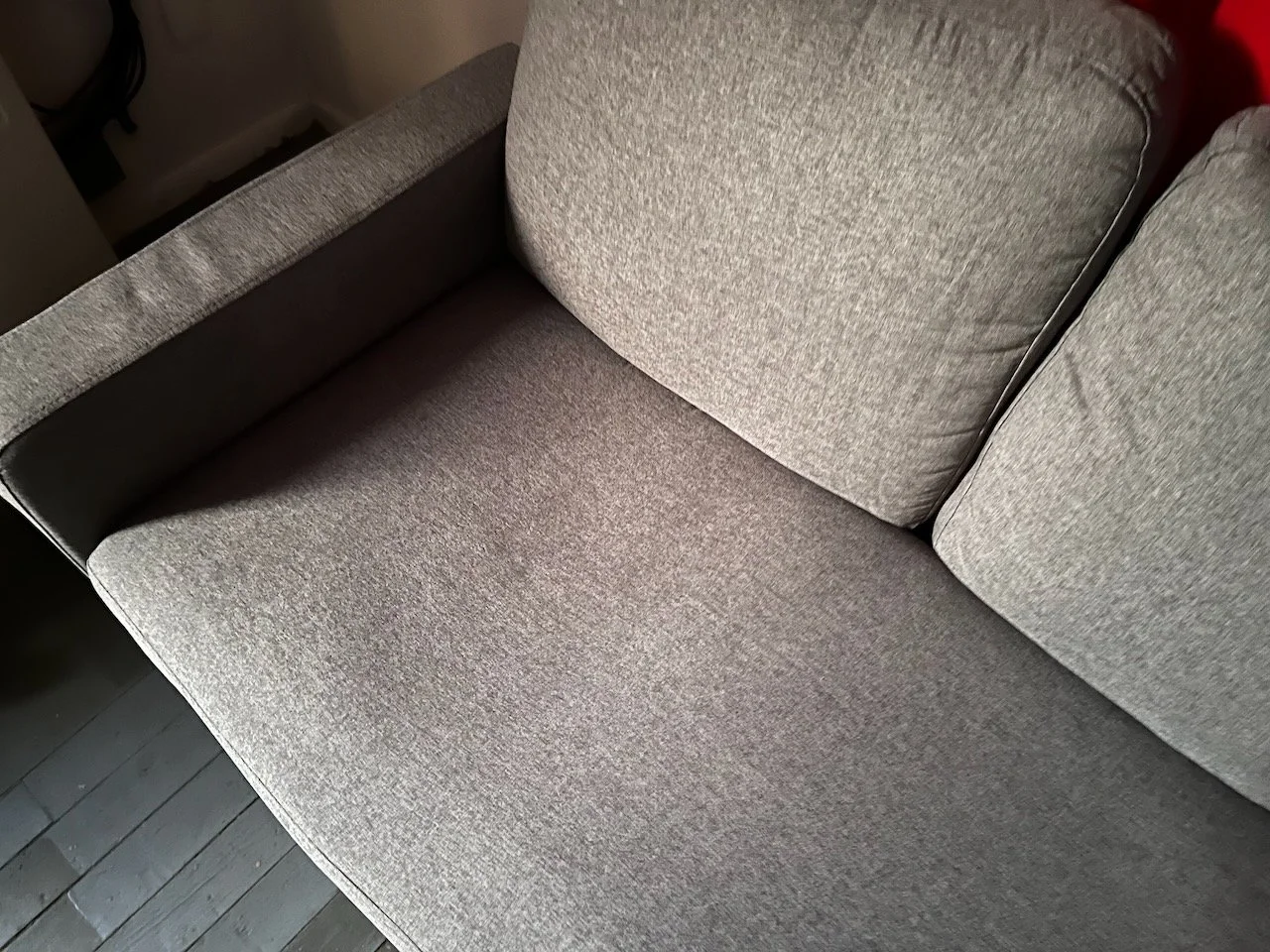
Her ghost appears at the couch end and she pats the middle cushion: Come sit by me.
This is the living room scene generated from the prompts on pages 28-29 of Dwelling, a solo journaling RPG about facing spirits and memories in a haunted house. You can read the first installment here. In this passage, the narrator has just descended a staircase into the living room…read or listen below!
LIVING ROOM
Scene-Setting: “The living room is dimly lit by the glow from the streetlights and moon filtering into the room. I start to walk through the room, but with each step, my legs feel shaky, like they’re no longer as sure in the knees as they usually are.”
The shift in scent is utter, it’s her curated mix of all the bright and fussy cans and bottles you’d see in advertisements with white backgrounds like rock videos, plus the sum of her mom’s house dust and what she cooked. It is like a cannonball of beach coconut, steam and gravies, candy-flower room deodorizers. I am felled.
I am still on the floor when an arm reaches out from the shadows on the couch end and pats the middle cushion: Come sit by me. I go where I am bidden. I gape at her as she forms, legs tucked in at the end of the couch, hair bound in back, working her cuticles. She could vanish into those for an afternoon, so absolute that I wasn’t sure which one of us had disappeared.
The scent-envelope lasts about as long as an FM summer hit. The harder I peer, the quicker the scent weakens, and her outline with it. There’s just a small depression in the cushion left when the TV comes on. The chunky green numbers don’t match the style of what I know J’s TV to display. His TV is old, but not as old as these green numbers.
Channel 84: The blond wood coffee table with the oval frame that had a hollow for magazines that you could see through the inline glass panels at either end. That should have tipped me off.
Skinny kid with brown eyes and cropped hair, underweight at about six feet, cap with some kind of golf resort logo parked on the back of his head. He’s side-lit from the sliding glass door by a summer sun’s mid-afternoon arson, its smoke a colossal column of boredom that breeds the legion of usual aches. You can beat the first ache with lunch, the second with masturbation, but they multiply regardless. He lifts the needle on a record player on a shelf behind him. The bookshelf matches the coffee table.
It’s “Trust” by 7 Seconds, their love song, last track on The Crew from 1984. He can never pick which part he’s air banding, he switches between bass, guitar, drums and vocals several times. It’s just 2:17 long.
He cues it up again. This mope is tireless. On the third play I recognize it’s me and I watch the fourth and fifth play through my fingers, sick with shame. The scene isn’t supposed to be lit like this, the world outside so bleached with light that dusk doesn’t seem possible even though there was one just the day before. It was lit by footlights in a small music club. When the chorus hit I’d look down — I’d have to be on bass or guitar for this one — and see her in the front row. Somehow it mattered that my band had booked the gig and I hadn’t known she’d be there.
That poor over-freighted melody. The sentiment of the lyrics was all stolen, they were show-home staging tricks. The idea was always the melody that would corkscrew us inside each other. It’s always the melody. Hijacking that was the false voice that you think will make you understood at 17. Because you still wouldn’t know what to say to her or do with her before or after the song.
I just wanted her to call me once that summer, I wasn’t even excited about going to college.
Channel 130-142: I recognize myself immediately this time.
Good God Almighty, I even dreamed myself up an eye patch in this one, pulling up next to her at a stoplight on one of those night-cooled four-laners with landscaped medians that connect master-planned stretches of this and that. What would be playing. Maybe Funkdoobiest if I wanted it dangerous and cavalier, Ned’s Atomic Dustbin if I wanted to instill uptempo regret in her. In Version One I’d turn slowly from behind the wheel of my astonishing vehicle and regard her with dead eyes, because what do you do for vindication except stare at them from a distance greater than the span of their retreat, one-up them for scars, accomplishments and mystery? Streak like metal and liquid across the dome of their dream world like they did yours.
In Version Two on Channel 131 she has girlfriends in the car to witness what a dreary plane she’d confined herself to when she let me go; they gawk as I light a cigarette just before the green light and the hookiest part of the sample hits and vroom, that’s that. The channels advance faster. Apparently I devised a whole career’s worth of these.
Oh look, now I’m in a track suit with bodyguards in a resort town where she happens to be staying with her family, again with the eye patch, not very imaginative to keep replicating that touch. The channels keep flipping through one tawdry coup de théâtre after another, all shows of strength and indifference, you’d think this I could have worked a rescue or two in there. I feel sick, but I stay on the couch.
Channel 187: I look like I’m in my late 20s now in the pool hall. It’s a well-appointed one: The regulation tables have beautiful felt, the rails are lustrous, the lights are even and the rafters high. I’m overdressed for Denver as usual.
Her cousin is there with her boyfriend and there is a lot of laughter. Nobody besides me gets too invested in their turn during our doubles game. Those couples’ games would stretch, the last seven balls invincible. We’d try to coach, but it would be seven balls perpetually because the girls weren’t that interested and the boys were too drunk.
The pool hall is crowded, young professional kids on a Friday night and there seems to be a lot of people we don’t know forming a gallery around our table. What is it with these onlookers? They’re almost all men, a cluster of ectomorphs.
Then I notice Bryce is there, looking at ease, he’ll be the one on her arm at her little sister’s wedding, ropy and tan as a lifeguard. There’s Andrew, for whom she jilted me before Bryce. Gentle Karl is there in a tartan driving cap and his long, brown hair.
I sink the 10 ball with a beautiful cut that rockets it neatly to a corner, magnetized to the cushion for what looks like a gymnasium’s length. I leave the 20 oz. cue on the table and walk away unnoticed.
Channel 102: That same pulverizing sun except it lights the respiratory junk of the desert gambling tower roofs and the awful concrete that boils and the cars are its lava. Drawing the thick inner shades, it’s 10 a.m. At some point the rolling chatter of the machines turned into the choir of Mammon as the night we had T-boned the oncoming morning.
Please stay here with me.
What is sold to you as fun under the dead sun and the concrete. She is as calm as a cultist. There’s no need for a fight because there’s nothing to fight about, she is going to walk right back into the heart of that thing that whispers in the spaces between $1 coins hitting the metal troughs; throbs behind the lit ad panels, their jumbo lobsters and necropolis summers; gurgles beneath the green water that conjures the free 11:15 show up out of the synthetic lagoon.
Please stay here with me. It’s been all night, I just want to clasp her under the sheets and drift off together. It’s very important, but her smile is fixed for sacrifice.
She goes out the door and into the hall of the 15th floor to find the elevator down.
I can’t leave the room. I should be hungry. I’m not looking out the window or watching TV, that’s just another window, except worse.
The TV turns off. There’s a trace of artificial berry lip balm and cigarette smoke on my mouth.
Next: The Dining Room
Learning Avalon Hill’s Squad Leader, Which I Put Off for 40 Years
I put off learning Avalon HIll’s Squad Leader for 40 years. Finding an online big bro who knew the rules by heart was the lantern I needed to explore this cardboard Shangri-La.
This is adapted from the script of Episode 94: Avalon Hill Squad Leader - Shots Fired After Owning This for 40 Years.
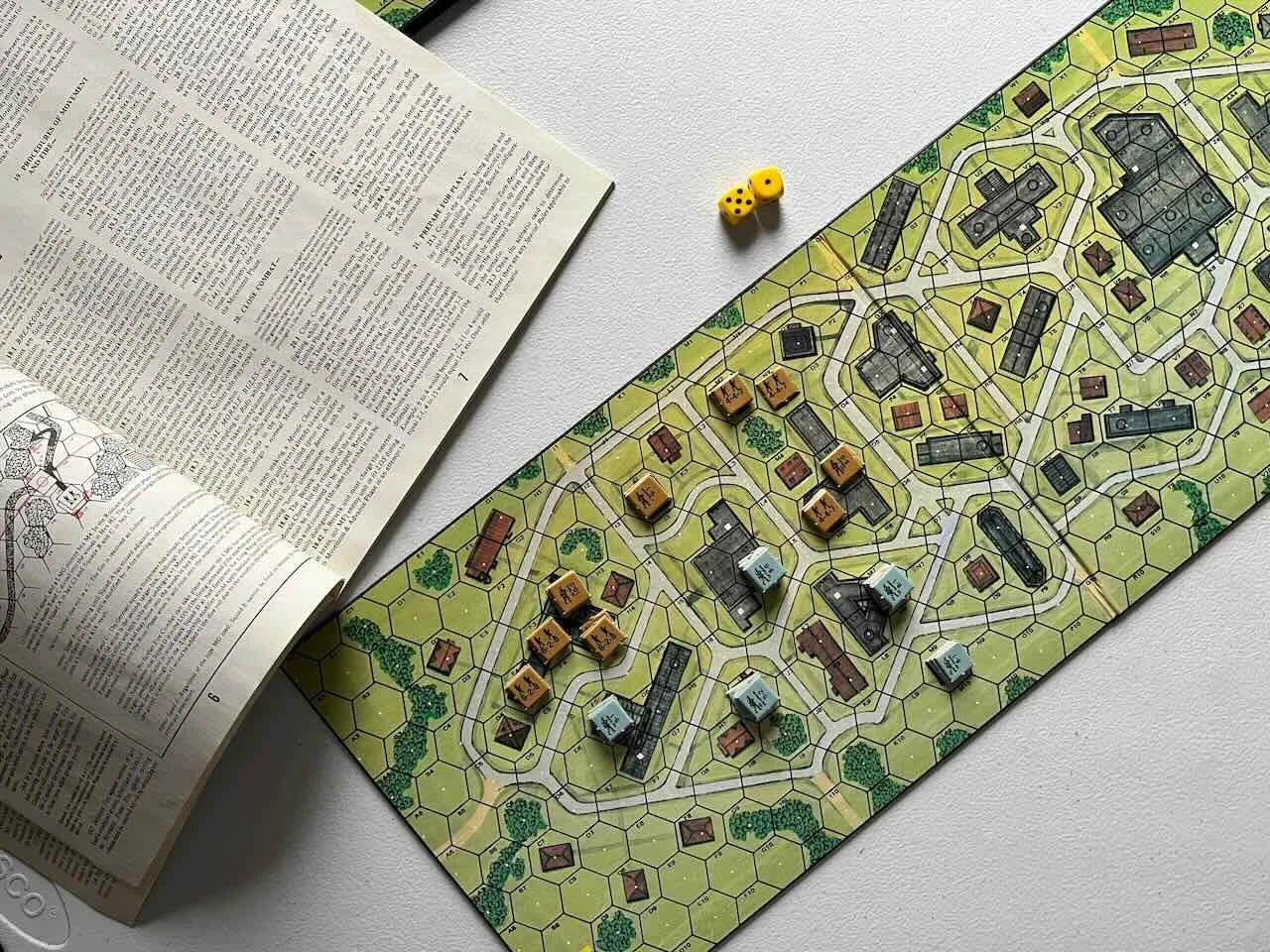
It looks like the opening exchanges of building-to-building fire wobbled the German squads across the lane. Can I take these fuckers in a rush with the rugged elements of the 37th Guards?
Turns out I can, but they dart through an alert German MG team’s field of fire on the way. This was the cost of that little sprint:

First blood: I lost six squads in my first-ever charge. Gotta learn somehow.
Their sprint crossed the merest sliver of an alert German machine gun squads’ field of fire. An expensive jog, but what the Russians lack in command acumen and support weapons in Scenario 1: The Guards Counterattack, they make up for in numbers. The survivors enter the building and stomp out the remaining Germans there in both hand-to-hand fighting and a short, lethal exchange of fire down hallways and staircases.
This old hex map and its tiny counters now seem lit from within. Getting to finally play this game feels like finding an old roadster in a barn and getting it on the road — a model still driven today by a dedicated subset of wargame lovers because they love this legendary system and its successor — Advanced Squad Leader — so much. I’m starting to see why.
A Bit of Background for Our Readers Who Either Don’t Know Anything About Wargames or Who Think They Don’t Like Them, But Who Are Wrong
Squad Leader was released in the 1970s by Avalon Hill publishing, one of the two big strategy publishers of the time, the other being rival SPI.
A whole generation of military history nuts who wanted to fight the big battles out for themselves with historically accurate units and conditions were relitigating the Eastern Front, the great 19th Century wars of the Continent, the U.S. Civil War and more. There was a race to put out creative and rigorous designs that fed these subterranean armchair generals the right balance of scale, realism, and strategy vs. the chaotic fates of the battlefield.
Squad Leader entered as a full-on squad-level simulation exercise. The main categories of action are just firing and moving. But almost every real-world consideration of those fundamental activities are governed by formal metrics: Did you move before you fired? What’s your terrain in relation to your target’s? How much stuff are you hauling when you move, and across what? How’s your morale? What’s the skill level of your officers? When your rifle squad freaked out and ran — which happens in this game because sustained machine gun fire can riffle-shuffle anybody’s nervous system — do they have to hide in hex K5 or L4?
Every consideration is codified in a rulebook and reference cards whose tables look like they might have been purloined from the working real-life command HQ: Infantry Fire Tables, Close Combat Tables, Support Weapons Charts, Movement, Terrain, and even a droll little chart for what happens if you try to sneak around in a sewer. Roll a die! 1-4, successful. 5-6, lost. Think of the granular combat considerations of, say, older versions of Dungeons and Dragons pointed at their operational essence, except you don’t have to think up what your characters say around the campfire. The action is the story. And it’s a vivid one.

Ain’t she purty
But I don’t have to think about sewers yet, thankfully. In addition to its dense but well-written rules and the cohesion of its modeling, Squad Leader’s designers also rolled out a tool they called Programmed Instruction: a series of 12 scenarios — six from the Eastern Front with Russians vs Germans, another six from Western Europe late in the war with Germans vs. the U.S. — that feed the complexity to you in chunks.
Section 1 is a firefight in Stalingrad that only puts you in charge of men and machine guns. Scenario 2 lets you play around with flamethrowers for the first time, use demo charges, smoke cover, concealed units, and learn the quantitative joys of individual unit fanaticism. And so on, until you’re finally able to graduate yourself to even more complicated stuff like vehicles and artillery.
But even Scenario 1 is a beast if you come at it cold. A bigger beast if you have nobody who will attempt it with you.
While simultaneously exploring my seasonal affective disorder (amateur prognosis) and GMT’s Storm Above the Reich over the winter, I sang this jeremiad:
I was talking to dudes on BGG’s Squad Leader forum about the copy of the game that The Moms got me for Christmas in 1979. She knew I was into WWII history and war movies, because weren’t we all?
I was 10. I opened it, gawped at each bit of it, and put it away. Some of the dudes on the BGG forum mentioned a common denominator: “My big brother and his friends…” They got to learn it under the wing of some adolescents.
And I realize it doesn’t matter how cool these games are unless somebody is there with you, moored at the point of fascination and raised on the broth of brotherhood. And I stopped shopping a bunch of wargames I liked that YouTubers were talking about when I realized I wasn’t shopping for a game. I was shopping for a big brother I never had, or friends I had and don’t have anymore.
As it turns out, I did have a big bro to teach me. When I repeated this complaint on Discord to longtime friend of the show Noisy Andrew, he made this thrilling claim: He knows all the rules for Scenario 1 (The Guards Counterattack) by heart, notching a 100% accuracy rate when his last opponent looked up his rule citations. Now this was a lantern I could follow into this impenetrable cardboard Shangri-La.
We downloaded the Vassal tabletop emulator. He even did the heavy lifting of figuring out the software and Squad Leader module. We are now in our third week of successfully straddling the Perth-Starkville time zones for one-turn sessions and I’m having the time of my life.
We are in Scenario 1 for a second time and now I’m learning to look for that one early exchange of fire that tells me I have to shore up a flank and keep my head down…or follow that wisp of blood in the water to a weak spot that’s ripe for the chomping. I go to bed with the footage drawing itself in my head; even misfortunes that happened on my side of the ledger are vivid and satisfying.
Now that Noisy has given me a working frame of the action sequence, I now have occasion to set up my physical copy so I can retrace the finer points of the rules. They’re a lot easier to read once you’ve seen some action. My general experience with crunchy games is that digesting the crunch is not only a minor thrill of achievement, it delivers a richer experience.
Which is why what’s happening here is way beyond a thumbs-up or thumbs-down proposition. Hex-and-counter wargames are a subset of a subset. On sight, these creations are either hilariously off-putting or they’re as irresistible as the deep-memory drumbeat of the sun that lures the characters of JG Ballard’s The Drowned World south to vanish into the book’s florid, mutated Triassic swamps.

The fellas are gonna laugh when they find out I didn’t use proper clippers.
While I cover newer games—the level of passion and creativity in tabletop design is boggling—I have been digging backwards more in all my media consumption, as things redolent with real human work are more and more appealing as the automated, the synthetic, the simulated engulfs everything.
Why fret about whether the sludge I'm looking at everywhere is human or bot when I can pick up, say, the Joseph Conrad book on my furnace cabinet and know a human made it? No guessing. No looking down the mirror hall. Regular consciousness and representing it with language, as we'll find in the wrestling matches of the great artists, is complicated enough! Why the hell do I need profit-motivated Silicon Valley mutants posing profit-driven additional conversations on top? The inexhaustible riches of the near past are there for the taking.
Squad Leader is categorically beautiful for this reason: Looking at the hundreds of tiny cardboard counters, you can hear the chug of an offset press as the Avalon Hill team — probably wild with sleeplessness — watches the first proof run emerge.
Reading the steps for managing a unit that’s crumpled under fire, you can feel the long hours alone and the waypoints of fierce crosstalk as assumptions are playtested.
Right as I finish this section of the script, I see the mail gal put a white package at the door of my addition: That would be the specialized Squad Leader counter trays I ordered. That means I’ll be spending some time this weekend with a cold one on the table, happily clipping and sorting every single piece, fully immersed in the small and happy ministrations of one of the many small pockets of the world that VCs and private equity haven’t figured out how to ruin.
You’ll never find me today, you bastards.
Today I am unprofitable, and therefore, if just for a few hours, free.

Dwelling Solo RPG Session and Review: My Ghost Story So Far
“My heartbeat feels like a finger being drawn around in circles on the skin of a snare drum.” My first session of Dwelling, a solo RPG for ghosts from Good Luck Press.
This is excerpted from the script of “Episode 93: Dwelling Solo Journaling RPG aka The Human Heart is Spooky AF” if you’d rather hear this than read it.
I have to tell you about a dream I had.
My lifelong heartache and love — to the degree which I ever experienced love — was in an out of my life for 20 years. Nobody else has been in my life that long or in so many forms: high school prom date and heartbreak, occasional lover and then girlfriend again (and heartbreak again) and a few sad richochets of each other in our in 30s.
In the dream, I was in one of those very bright corporate office building lobbies, overbright really, that also housed an art gallery. I saw her crossing it 20 feet from me. I knew she wouldn’t turn her head unless I hailed her. The sighting brought the same where-did-she-go-and-why-doesn’t-she-want-me-anymore ache.
In the next scene we were at a small, circular table in the lobby. We had already talked for a time. I was entreating her. It became clear that the only love I would be getting was a universal one — one of her best qualities was a general deep tenderness and empathy for others — not the kind I wanted.
The explanation didn’t gel into words or none I can remember; I only remember the knock-you-over sun of her smile, her dimples forming…and becoming aware of a document on the table before me, upon which sat one of those crappy Bics with a blue cap.
I knew at once that I was to sign this document, which would not only surrender the addictive, selfish, and transactional “love” I demanded, but release me from everything I’ve hauled around over the decades. All of it, down to the clutching at life itself.
I did not sign. I slammed the pen on the table, raised my voice.
I don’t remember her at the end because I’d attracted the attention of a security guard, a husky dude with a mustache, a shoulder-length haircut that suggested he was in a band that played taverns on the unfashionable strip of South Broadway in Denver, white shirt and gray slacks, explaining that I would indeed have to go, gracefully or not, ready or not.
It was the kind of dream to which you want to remain in service for the entirety of the day after it occurs. She had appeared to me as a psychopomp, a figure that offers a mortal soul transport to the afterlife, and she had tried to be nice about it, transcending my wants and becoming a passing teacher, a door to something else. It riveted me for days.
I was sad, but also felt like I my time in the country had given me a signpost in the gallery of lost faces that I recall and query too often. There’s so many of them, they blot out the stars.
I also felt like it’s been too long since Breakup Gaming Society featured an indie creation. The past year has featured mostly popular titles from widely known publishers. So when I stumbled across Tabletop Tokki — check her out on YouTube, she’s an underrated creator, IMO — talking about Dwelling, a solo game for ghosts, created by Seb Pines and published by Good Luck Press, I ordered a copy immediately. I was overdue for this.
What follows is the the first few rooms of my encounters from Dwelling’s prompts. The backstory: Your character in this solo journaling RPG is somebody who has just inherited a house from an uncle.
Unsettled, you move room to room on a restless night and are fed prompts to describe the nature of the many spirits you find there as you track down sounds or oblique forms in shadow: What they look like, even. You can draw them in the book if you want, but I skipped that part because I wanted to focus on the writing. What memories do they dredge up? What marks do their appearance leave on you?
What follows is my ghost story so far. I’ve had an encounters in the bedroom, the guest room, the staircase to downstairs, and the living room. For each room I’m going to set you up with a bit of the prompt for book, then what I wrote for the encounter.

Dwelling Solo Journaling Game: The first prompt happens in a nearly bare bedroom in a house recently acquired by the narrator from an uncle.
BEDROOM
The first spectral appearance is cued up like this: “I let my eyes languidly take in the walls and make sense of the still-unfamiliar shadows, tracing the shapes with my unfocused eyes and still hazy from sleep. In my sleep-addled imagination, my mind conjures a shape in the shadows, the way the darkness piles at the end of my bed, making the dark shapes against the wall look as if something is peering over the edge of my bed, looking up at me.”
Here’s how I managed that prompt: Just off my left foot, something with eyes on stalks, a repulsive density in the folds of the summer-weight comforter that carries over from the dream. Its unverifiable teeth and opacity of intent…was it jostling for its corner of the bed or working its way up my leg? I was unable to move in the dream, but I manage a kick. The dune-folds of the comforter returned now, innocuous.
Throwing the comforter off me, there’s the high contrast of cooling moisture on my left pec. I test it with my fingers — it’s a small puddle — then my armpits with my other hand and find them more or less dry.
I lay there with my forearms pointed up for the better part of a minute, rubbing either thumb against index and middle, in the wonder of a backslide. TDF would not permit herself to fall asleep on me because she was mortified at the thought of being observed while drooling.
Such was my wonder on the day she did, I stayed awake to bear witness as she slipped into her noiseless slumber, black hair splayed out, for a full hour, drooling slightly.
It felt like the most important thing she’d ever told me, but I’ve always had a bad habit of assuming that more was exchanged in shared silence than had actually changed hands.
GUEST ROOM
The story next takes our narrator back off the lip of sleep to investigate a sound in the hallway. We locate the guest room as the source, which was the primary bedroom of the uncle who left you the house.
It is still furnished with many of his things, and the book feeds us another encounter with this cue: “Uneasy in this space so personal to someone else, I find myself tiptoeing through the room. Moving through the room slowly, it feels like my stomach could drop. Then—I hear a sound: A small, startled inhale.
This sets up the following encounter as the being who made it forms in sight and action:
Tsk-huhhhh
I am seized with fear and shame.
Tsk-huhhhh
A diminutive form regards me, glaring.
Tsk-huhhhh
The sudden need to placate it trumps the fear of its wrong-presence; I release the muscles in my clenched feet and wamble forward. It vibrates with impatience.
I peer at it, trying to find some outline at the edge of the simmering seven-shades-of-dark that ought to be its center. I test the air between us with a slowly raised hand. My heartbeat feels like a finger being drawn around in circles on the skin of a snare drum.
I rummage for mollifying words. It will not wait for the words. A hand reaches out, grabs my wrist loosely, thumb playing along my radius with a tentative, imploring pressure, then darts straight for the left pocket of my sweats, digging for something. I am rapt with its anger.
Tsk-huhhhh
The hand darts away, and with it the thonk of whatever it was fishing for. The noise preempts the hiss of the snare drum’s skin; I find a lamp, turn it on and see my Motorola on the floor, screen spiderwebbed from edge to edge.
I did not. I did not carry that in here, I can never relax with that in my pockets. I wouldn’t do that any more than I would wear plate armor to bed.
I did not. I know it.
Only the phone’s date and time display clearly now. I am able to unlock it, my skin dismayed at the new microcontinent of jagged fissures on its face. Key app icons occluded by milky cloud of errant pixels, like a mind trying to gnrrr out its last few sentences in the middle of a grand mal seizure. Half-digested juices of 10 years of sudden-onset arguments, resolved by fatigue and breakage, if not reason.
I cannot afford to replace the phone nor think too long about replacing the phone. I place it on Uncle Jay’s dresser, my eyes fixing on the top leftmost drawer. That’s where I found as a boy what I would later learn is called a Moleskine notebook.
Was I five, six, seven? On visits here to see Jay and Beverly with my parents: I was better than average at verbal stuff for my age, but unable to penetrate the atmosphere they generated around themselves in the evenings, when Facts in Five would come out and they would play far into the night, smoking joints and drinking red wine and bantering in a tongue I badly wanted to acquire.
Sometimes I would try to yip out things that sounded like they belonged in the category they were working on, but I would usually be left to entertain myself after tiring of staring at the box cover on the floor and failing to puzzle out how I could gain entry into a world where Abraham Lincoln, some kind of Asian princess, and a rushing football player all waited for you in a city of skyscrapers and old temples.
Glum with being excluded and tired of the box that suggested everything and told me nothing, I’d wander the house. That’s when I found the Moleskine and Jay’s block type and recognized some of the words: “savage,” “gray,” and “sicknesses,” but the sentences only resolved to the growing boredom weighing on me and the increasingly enchanted gulf between me — too tired to know I was past bedtime — and the laughter from downstairs. When the laughter tipped to fighting, Jay’s voice was always knifing over the top of everyone.
Something snags or tickles inside my sweats. I reach in and pull out a long, dark hair from the seam between my thigh and crotch. I whip it away backhanded.
I did not. I did not bring this in here with me.
Despite the displacement and anger, pure exhaustion, sweet and total, beckons me like a maritime wreck at peace in the silt.
And that’s the way the Guest Room encounter concludes. But no rest for our narrator, dear reader, because this long night is full of more sounds.
Ready to go downstairs? Me either, but fuck it, because we hear the loud creaking of a door hinge from down there.

Dwelling Solo RPG Prompts: Uh oh, we’re headed downstairs because there was a sound. There’s always a sound.
The next exercise is the descending staircase, where you’re invited to recount the scenes from the day that led to this moment in time. I count eight steps in the illustration on pages 24-25, so I do eight memories. But not before my character yells at the source of the noise.
STAIRCASE/DOWNSTAIRS
“For Godssakes can we please not have any more Krakatoas or Hindenburgs in the remaining seven minutes of this fucking day?” I shout back at the unmistakable long creak of a door from downstairs. I know the cadence of those lumbar pops by now. That was a door. Yelling back seems the strongest defensive spell I can cast. Good old annoyance, even as bravado, helps resituate me.
I wait for an answer, for it to duplicate itself, then head downstairs, policing slowness, ears on high alert:
A List of Happenings aka This Fucking Day
Step 1
I entered this house again from the dream of the debauch in the loft, steel and glass like I imagined I’d have one day, the city off its balcony a pile of fulvous jeweled yellow, friends and employers there. There was a curtain of force that kept me at 15’ remove from the faces. It would give at first when I moved near them, then swell and repulse me and I’d find myself in stairwells, pushed into the wrong clothes, trying to avert or start emergencies in fuseboxes, looking at drywall and olive drab diamond plate steel landings, talking to undercover cannibals full of ruses and sinister half-formed phonemes, sentences fused together and rolling, rolling. An enduring feeling of failure that kept me in bed long after I woke.
Step 2
Noticing the welts on the insides of both wrists like an allergic reaction, raised, red, like pollens went at me with claws.
Step 3
Washed my server uniform and jeans in Uncle Jay’s ancient Kenmore; it works fine, but I was so unsettled about taking ownership of this museum that I was still using laundromats a month after moving in. While doing this, I worked out a few more lines about the realtor bluegrass jingle where you get blown if you close on a house: Stomp your hands, clap and scream/It’s the #1 Dicksuckin’ Realty Team/Wrap your lips ‘round the ‘Murican Dream…
Step 4
I only have one freelance client left, so I should have done a better job. I used to crush stuff like that article in 45 minutes, now it takes 3 hours. The writing is easy. Caring about it is nearly impossible. 45 minutes of breaks in between every few paragraphs: Yahtzee on the phone, hunting for a pair of cufflinks — cufflinks! — in the living room’s unpacked boxes. I was seized with fear at the thought of not having those cufflinks anymore.
Step 5
Again I daydreamed until my body was past hungry and tipping into rage, shrugged at the kitchen — still the only fully unpacked and operational room after three months — then drove up and down Welty Boulevard., unable to make a decision about lunch as if if there were a firing squad waiting for me after the meal. Wound up at Sonic, four cars deep with four heads each and they all looked like bearded dads in UnderArmor hats with full vehicles modding every single thing in every single bag, can you fuckers die. Reminded me of that time Uncle Jay took me to Yosemite and we got caught behind some cross-country cyclists on a two-laner while trying to exit the park. After 15 minutes of glaring over the top of his steering wheel in silence, the exquisite groan: “Uuungh, can’t they just hop tree to tree and leave me alone?”
Step 6
I gorged at home and attempted a half page of the book about the Byzantines. It was chief in J’s collection and he’d package what he thought were the funny parts for me over the years. Sometimes when I’d get on his nerves he’d tell me to comply or get the Byzantine Retirement Plan, which by then I knew was having your eyes gouged out. I still can’t get through it; I’ll read a book a month sometimes then stick on one for a year even if it’s labor. The bare bedroom was getting too warm in September’s late heat. I am at ease when the weather is pleasant enough not to think about and beset the other 10 months of the year. I know I should read but all I could see was a shifting scribble of a brain trying to read.
Step 7
I tried to relax with a walk at dusk, tracing a halfhearted three-block rectangle, the horizon opening up briefly on the shortest leg of the rectangle, 23rd Street. I saw a disintegrating colossus of thunderheads in the west but drizzled with pink on the outer rinds, green on the bottom where the edge of the municipal golf course began blocks away. I passed the janitorial supply store and the bleached cutout of the woman and the mop; I’ve walked by that shop since I was a kid and I still can’t tell if it’s in business or not.
Step 8
I found A.B. on Instagram because cycling tabs for a dribble of likes starts crushing you after the sun goes down. It was the same smile from when she asked me in the HS library where the pencil sharpener was, she knew damn well where the pencil sharpener was. Still a lovely dresser, stylish without being trendy. When she asked me about the pencil sharpener I remember she had a turquoise bandana rolled into a perfect hairband and I didn’t understand in my panic what she was asking for at the time, but I did understand, or thought I did, that if you had a girlfriend with a turquoise bandana hairband and a smile like that, you were all right, you had a foothold on something.
Next comes the living room, where we see the first manifestation of A.B. I’ve got the living room scene written, but I’m going to pin this for now because I want to refine the scene a bit and talk about my impressions of the game so far.
As a writer, I’m a fountain of jokes, complaints, opinions and stories. That comes easy enough. I’m good at scenes, bits and fragments, but rarely attempt the discipline of longer stories. And when I do, it’s usually show-off observation and ideas and riffs without much shape.
Dwelling — and the way it nudges you to triangulate the book’s cues with things you remember and things you can embellish — has got me writing an actual goddamn story. Much more of one than I set out to do.
I had to quietly eat some crow about my contempt for people who workshop stuff, go to conferences and do guided exercises and the like. But what pure stories have I ever written with my big, manic imagination? Almost none. Yet here I am, several thousand words in to one. Turns out I needed a prod in my ass after all, just like all the earnest amateurs I mocked to my friends. So I’m walking that one back. QED. Score one for you, Seb Pines.
The fact that it’s a former uncle’s house is also rich ground. Because of the dream I had, I more or less know the outcome and the arc I want — the intoxication of attachment and desire, its awful fulfillment and the grace of letting go. But now I’ve got a subplot on my hands with the lingering presence of an uncle that has me thinking hard about the encounters as chapters and how Uncle Jay’s strand mirrors or diverges from the narrator’s wanderings. It’s almost overwhelming. This is turning into a workout.
This goes for the emotional processing, too. I’ve noticed something else cool happening in the past few weeks: I’m revisiting scenes of my old self with less recrimination, less shame, less bitterness. I don’t want to oversell this as some replacement for more formal means of care, but grinding through these scenes transmutes the poison tang of how I recall things, at least lately. I feel lighter. I can sift a bit more dispassionately. Not picture everything as evidence against myself or others.
So where does this sit in the tableau of experiences we would call games? I can’t tell you yet. It’s categorically different and I’m incredibly glad I sought it out. And I intend to stick with it.

Learning Board Games: I Interview a Newbie About the Line on the Pain/Reward Graph
How do you experience the pain/reward curve of learning new things? I chat with contributing writer Fritz Godard about his first solo board gaming experience.
As a lot of board gamers who defaulted to solo mode when their friends refused to play have found out, the avoidance of the unknown and the learning curve is real.
Contributing writer Fritz Godard had never engaged with a solo dungeon crawler before 52 Realms: Adventures and writing this account of his struggles with the experience.
This was fascinating for me, as I love strategy and hobby games, but still hate learning them. I called him up so we could compare notes about the process of getting over the hump of confronting new systems and hitting the payoff.
We talked about the pleasure vs. pain of learning new stuff, what we saw as a reviewer’s responsibility, and I also asked for his help in trapping/killing some kind of wight or will-o-wisp on my property now that he’s a big, tough dungeon adventurer. Hit Play below to hear our chat.

A Sublime Moonlight Massacre: Fritz Godard Lands in Starkville
A night of smoked chicken, beer, rye, Project L and several slain Final Girl extras on a moonlit night in Starkville, Colorado.
This is adapted from the script of Episode 92 — “Faraway Review + My First Time on Board Game Arena” if you’d rather listen than read.
“There’s two things you need to know about this place,” I told Fritz Godard when he pulled up in my weed-choked driveway a couple nights ago. “I got in way over my head when I bought this old place, and I cleaned today until I got bored, which was 12 minutes.”
It helps to say these things next to a Char-Griller with sweet oak and tangy mesquite smoke pouring out of it, and to follow it up with a cold pint. I figured I’d get a rapid buzz in this dude and the black grime on the kitchen baseboards would make him feel at ease and generally better about himself, if he noticed it at all.
I had two six-packs on ice: Avery Brewing’s White Rascal — I’ve always enjoyed having the Rascal around as temperatures climb — and Leinenkugel Berry Weiss. It seemed like a decent side bet, considering this was the year’s first string of cloudless high-70s days.

Beer and boardgames: The Hamm’s vintage beer goblets are broken out to celebrate Fritz’s safe arrival.
The taste of the Rascal reminded me I had two old friends in the house. I love nearly every Avery Brewing product I’ve ever had. White Rascal brought what I always remembered: suppleness while still being crisp, the orange zest playing along on the beer’s body like sundogs. These got crushed quickly as I taught Fritz how to run Project L, which I reviewed back in Episode 88.
Pivoting from that to the Leinenkugel Berry was the evening’s only disappointing turn: The whiff of orange that comes off a White Rascal is girded by an actual beer around it. These Leinies had a tinny ring of artificial-tasting berry and nothing else.
“It reminds me of what Vitamin Water tasted like in 2008, like they were trying to come up with something to compete with a boozy seltzer,” I said.

Learning Project L: Fritz ponders what to do with the nice base of pieces he’s acquired; he used them to nip me 21-20 in our second game.
“This is like what you give a niece or nephew who are having their first beer ever,” said Fritz.
The digitized berry startup sound that was the entirety of the beer’s personality stuck in my mouth for several minutes after, as if I’d been trance-eating SweetTarts or Spree while watching schlock on YouTube.
I dislike this beer intensely. I’d reach for a Keystone Light before I’d ever open one of these again. It is an annoying beverage. Know what sounds like Berry Weiss? Bari Weiss, which is also trash.
This was when Fritz’s time bartending and being a semipro lush in Louisville, Kentucky paid off. After pouring, trying, and touring his way through bottles, shelves and vats of brown liquors made in the Southeastern U.S., he pulled his favorite from that era of his life out of a brown paper bag: a bottle of Michter’s Rye.
The first belt of that Michter’s after that candy nothing beer, the reopening of the senses, was akin to the relief of being in a room where somebody is blasting anime theme music over a phone speaker for 20 minutes and you don’t realize your body’s been slowly tensing up in rage, but all of a sudden it stops because somebody else just drowned it out by throwing on some vinyl, maybe MC5 or Thin Lizzy.
Fritz said Michter’s became his go-to for its blend of bite and smoothness. And it was all there, that sharp, woody, upfront first hit, then a layered mellowness across the middle and back.
We knocked it back neat the rest of the night, stopping only to savage the half chicken and pickled okra I dropped between us on a cutting board, popping out back occasionally to watch the progress of a full moon and let the chill spring breeze from the south rake surplus heat off our boozy faces.
I showed him the ropes on Final Girl: Madness in the Dark before we succumbed to the ranks of unmedicated maniacs on the asylum map and passed out, him on the eastern couch, me on the southern couch, all the lights killed except, the orange accent strips on the floor beneath the couches, all sounds cut except the brisk tenor of the narrator. I’d thrown on an audiobook of J.G. Ballard’s The Drowned World. The rhythm of the words made drunkard’s hammocks in the middle of the book’s sweltering post-apocalyptic lagoons.

Damage report: 1.75 six packs, a chicken, most of a fifth of rye and several residential patients of Wolfe Asylum were destroyed in the making of this session.
I woke up several chapters later, Fritz’s eastern couch vacated, the moon and its jamboree mass having pulled with it in its western plummet the last strains of fight songs from fabled bandit enclaves in Brooklyn, the sun arrived to police chicken bones, the drying husks of night-bloom playlists, shot glasses, dice and the many yellow victim meeples from Final Girl that didn’t survive the second, deadlier night inside Wolfe Asylum.

Learning Faraway and Race for the Galaxy on Board Game Arena
Learning how to do Board Game Arena, the new hit Faraway, and the classic Race for the Galaxy all at once.
I’ve always resisted Board Game Arena the same way I resisted drop-in play at a game shop: If you’re not at a table with good friends, holding the damn pieces, what’s the point? Second-order experiences will not sustain.
But my transition to being mostly a solo player has been surprising and joyful, so why not challenge my absolutes again?
BGA has given me a chance to bond remotely with a new online pal from Canada — Dave from Dude! Take Your Turn — and a friend of the show for a few years now: Noisy Andrew of Party Meeple, hailing from Western Australia.
I buck against the experience at first. Not being in the haptic envelope is simply jarring, and my trial free account triggers a lot of upsell points for things I want to do, like invite either of my pals to a game.
I am completely unengaged for the first few turns of each match, but because Board Game Arena game apps know the rules and forces me into plays that are legal, if not optimal, the structures starts to gel as I play asynchronous games of Faraway with Dave and Race for the Galaxy with Andrew.
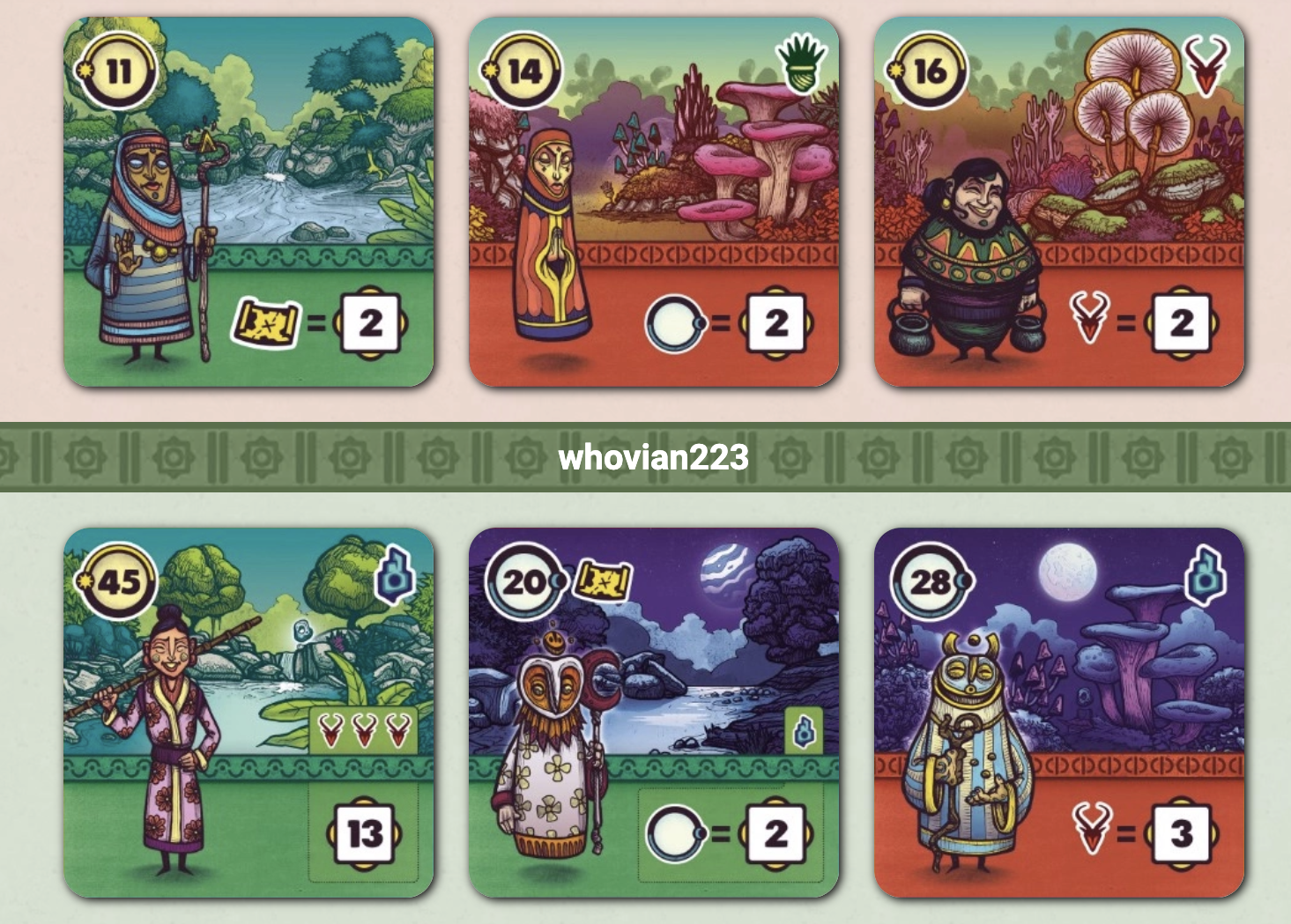
Faraway on Board Game Arena: On top, my first three visits are focused on modest prizes, but maxing the benefit of sequential locations. On the bottom, Dave doing something that will probably beat me.
Faraway With Dave
Dave offers to show me the ropes via this recent hit, a card drafter and tableau builder with two piquant extras going for it:
• Your scoring path is presented as a journey in a vividly imagined land with illustrated locals who greet you on each leg of the journey. They’re rendered with touches of the familiar spritzed with the fantastic. The theme seasons the moments of gear-grinding when you’re trying to puzzle out which cards to place on your journey and when. It’s always successfully atmospheric because its graphic choices are clever: Deserts are blue. Your hostel hosts wear elements of traditional garb lifted from across cultures and centuries, paired with imagined touches. Some of them look like maniac shamans, some your next best pal, some saturnine or standoffish…this place has flavor that always suffuses the calculus of the scoring puzzle.
• This “meet the locals” scheme also informs the puzzle aspect closely: These strangers are going to hook you up with a meal or a place to crash on your way through, but they’re going to want sought-after regional gifties on your way back if you want to score any points. This puts you in a turn-by-turn kaleidoscope of options — trying to build regional color runs vs. time-of-visit bonuses vs. rare plants, rocks or animals — that’s yoked to a very tight timeline through which you must think backwards and forwards. Once I get my first few drubbings out of the way, I’m hooked. And ready for my second series of drubbings.
In addition to being a welcoming docent in the shifting and deeply personal galleries of a passionate hobby player, Dave is a prodigious player. I enjoy peeking onto the his table to gauge “hotness” lists against what actual human beings are doing and documenting. I have a collection of creators like Dave on my RSS reader because of their enthusiasm, authenticity, and sheer amount of games they cover. This is especially valuable considering my glacial, neurotic and solipsistic play style.
In our current game I’m trying a strategy where I focus on the kicker Sanctuary cards you get for sequencing the regions you visit in ascending numerical order.
The automated oddsmakers of Board Game Arena give me a 27% chance of succeeding.
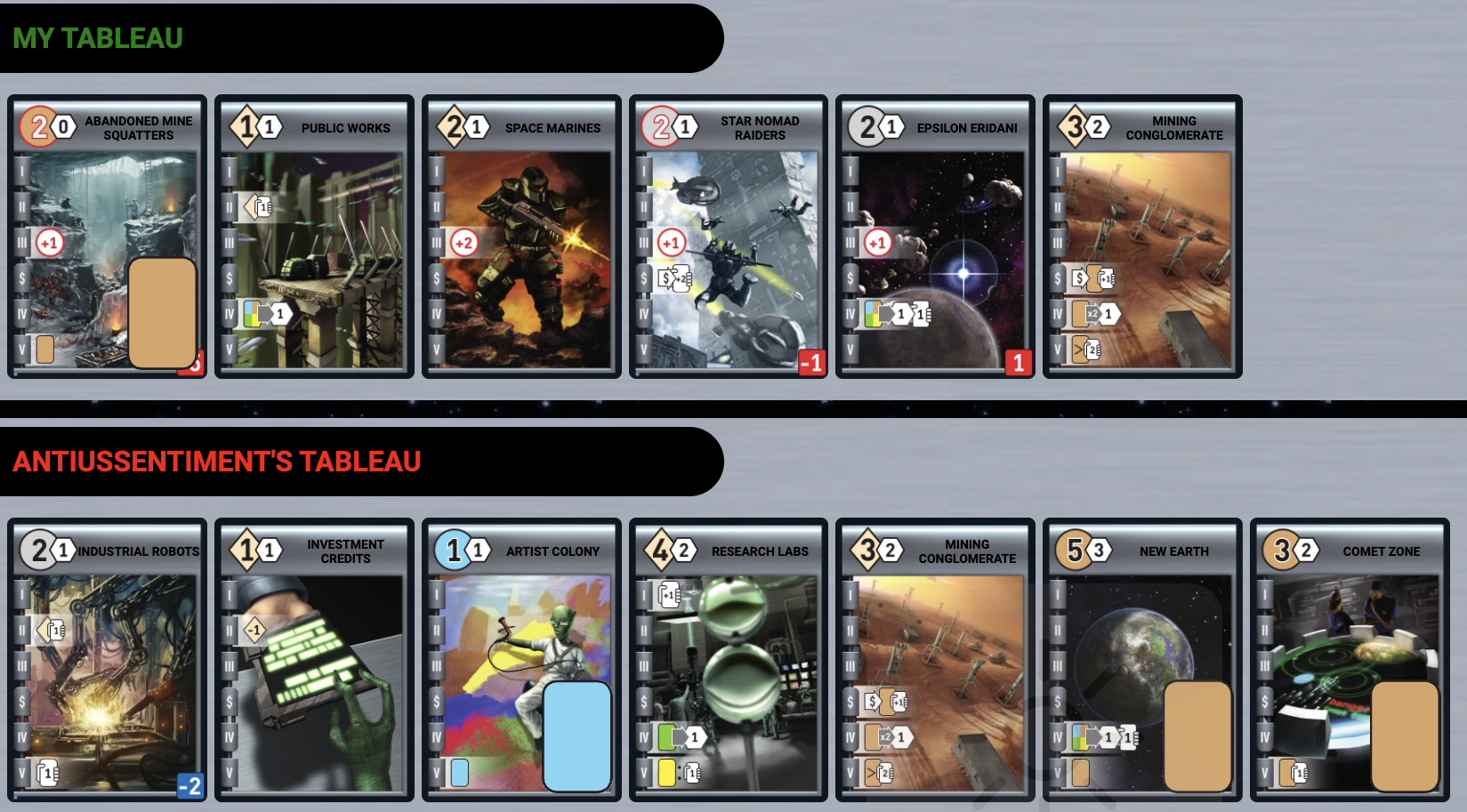
Race for the Galaxy on Board Game Arena: Andrew builds a vibrant economy while I mortgage everything to buy guns and seize production worlds that I don’t know how to run. U-S-A! U-S-A!
Race for the Galaxy with Noisy Andrew
Small board game designer Noisy Andrew and I go a different way: He proposes Race for the Galaxy — a game I tried once a long time ago while badly hung over. I neither grasped nor enjoyed it.
But I did notice its sticking power. In the years years since Rio Grande Games released RftG, despite hundreds of intervening iterations, twists and improvements on tableau building and set collection, it’s still mentioned fondly and bobs up in the occasional “best of” retrospectives. Andrew is only popping back onto BGA because I asked, so I run with his pick. I don’t want to miss out a second time.
I am taken immediately by the flavor of empire- and galaxy-building in the variety and names of the cards. I am also taken to the woodshed. I focused on stacking military muscle as a beginning action framework — pick a direction and row even if it’s not the right one, that’s what Dennis Hopper’s Deacon taught us in Waterworld. The unique “pick a phase where your stuff activates” and the “why” of cards otherwise evades me totally. Andrew thrashes me.
Smashing into the game’s guardrails repeatedly, I start to gain a sense of how to put together combos by my second game. As I write this, I’m doing quite well down the home stretch by shoveling alien tech and novelty goods into a consumer world apparently populated by people with lots of discretionary cash and little discernment. Unlike the U.S., which now has neither. I think we should import Dave and Andrew. That’s my economic plan. I expect your vote.
As I become competent with the BGA interface and the strategy of each game, I also become impatient with asynchronous play. I like these games. I’m getting that thrilling first step change in understanding where basic mechanics are connecting to better decisions. I want to play harder. To be fair to Andrew, he did tell me he was a “move a day” kind of guy, but when he hit two days in between moves, I recorded a plaintive Australian song to remind him to take his turn:
Thanks for being a sport, Noisy. You’re a good sort.
On to Squad Leader and Vijayanagara: The Deccan Empires of Medieval India, 1290-1398?
These gents might help me fill another shortcoming in my current tabletop career: Multiplayer stuff that’s more crunchy and involved than what we’re getting on the table during Monday night play at Frontier Geeks down on Main St. in Trinidad.
Once in a while I’ll lift up the silver lid on my wargame tray for local pals, seeing if they like the scent of old paper, reference tables, the promise of sweeping combat, the dense and spiky broth of highs and lows they’ll feel during this kind of story. No takers.
I complained about this to both Dave and Andrew. Dave shows me Rally the Troops, a small-collection, rules-enforced historical wargame platform where he has been fumbling his way through Vijayanagra, a game on my watch list. I’ve been wanting to get into a COIN/ICS title so bad this year. This might be the best way.
Andrew offers to help me with another late-in-life wish in that category: I got Squad Leader for Christmas in 1979 and never played it. I want to return to it and play it before I die. It feels like an important current of my life that petered off into a bog somewhere. Fortunately for me, he knows the game, confides that two-player wargame opponents are one of his shortages, and not long after he starts sending me screen caps of his Vassal downloads and Squad Leader tutorials. Holy shit. We are going in.
Board Game Arena — with the help of a couple buddies — is delivering new surprises all the time. I avoided platforms like BGS for years. Now it looks like I’ll be playing on three. Game on.

Pavlov’s House Review: First Tries at a Valiant Defense
This is the exact balance of narrative evocation, detail, and weight I was hoping for as a fairly new solo wargamer.
This is adapted from the script of Episode 91: “Pavlov’s House Puts the ‘Fun’ in “You’re Fundamentally Screwed,” which you can listen to here.
This is the second time Sgt. Pavlov’s position has been targeted as he directs his squad and tries to stay alive on the north side of the House.
He’s scarcely spit the dust out of his mouth from the German mortar shell that hit the roof almost right over him before a sharpshooter, seeing him dazed and temporarily out of cover, sizzles the top hairs of his ushanka with a bullet.
To his left, Murzaev and Turdyev take down their third Panzer with their anti-tank rifle. To his right, Gridin is slumped over his now-silent mortar.

Pavlov’s House Solo Play Review: As goes the integrity of the walls, so goes the ability of the cats on the west side to do anything. They’re all suppressed by explosions.
This is my second, and geometrically more rewarding, tussle with Pavlov’s House from Dan Verssen Games, from the publisher’s popular Valiant Defense series — which includes Soldiers in Postmen’s Uniforms, Castle Itter: The Strangest Battle of WWII, Lanzerath Ridge and Guadalcanal: The Battle for Hendersen’s Field.
This series of designs offers history buffs and boardgamers with an appetite for accessible, middleweight game systems the chance to manage desperate pockets of WWII action against Axis powers that ended up meriting their own chapters in the era’s history, mythology and propaganda.
This is hard-pressed platoon-level action that forces you to think like a lieutenant — or a sergeant if the lieutenant’s already dead — whose unit is surrounded, whose ammo is low, and enjoy from the comfort of your chair weighing a string of critical decisions made in a world with a scant supply of second chances.
In the case of Pavlov’s House, designer David Thompson deposits you in the thick of it: The Battle of Stalingrad and the storming and subsequent defense of Pavlov’s House, a four-story apartment block where Sgt. Yakov Pavlov and Co. seized and held this do-or-die strongpoint in the center of the city, where key locations sometimes changed hands dozens of times in terrifying chains of assaults and counterassaults.
Thompson puts another historically grounded proposition in front of you: Since about 26 of Pavlov’s 30 men died in their initial sprint to the house and the ensuing welcome-to-the-neighborhood firefight, how do you keep it? The answer plays out across three horizontal sections of game board, which zoom you into three levels of building detail and pressure:
Regimental Command on the Volga
On the right, the board gives you a high view of the regimental command areas around the nearby Volga River, where you have to think like a general in a bunker and make tough decisions about how to support the boys in the house with Stuka dive bombers appearing regularly to disrupt your defense and staging areas: Do you ready some artillery? Get food and medicine on a boat across the river? String up comms lines that will give you more breathing room and help you more efficiently issue commands? Fix a cratered anti-aircraft site in time for the next appearance of the howling Junker 87s? You can’t do it all because the House is just one of many pots on the Russian command stove — and sometimes even when you do get the right adjutant to the right place with the correct order, a bomb swill swat your intentions off the board like a cat at play.
In my first game, my first-ever casualty was due to hunger because one of those Volga boats didn’t make it — a vivid connection point in play between your decisions in the right area and how it rolls down to the street-level bind those men across the river were in.
Plotting the German Squeeze on 9 January Square
Let’s pan to the middle part of the board; we’re looking at an aerial shot with the roof of Pavlov’s House, with its commanding views of 9 January Square, and the German armor and infantry that spawns on six tracks surrounding the House: Panzer 2s, 3s and 4s, Stugs, Scouts, Infantry, MG squads. This view lets you see where the Germans are pushing toward you, drawing cards from a deck of German actions that conjure not only the aforementioned units, but other lethal interference: bombings, shellings, snipings, all designed to wear you down and let the on-board units breach the house when the next Assault card comes up in the Wehrmacht Deck. If that happens, you’re done, there’s no final score to tally up.
Every so often, you’ll also have to pass a supply checkpoint. Not having comestibles in the house has immediate consequences, as I learned early.
The Action Inside the House
On the left board: An abstracted map of the apartment block itself, where you command Pavlov’s squad, represented vividly with counters, some of which even have period photos and names of the men who mounted the stand.
This is where you make a different set of decisions — informed by both your command-level panel on the right third of the board and what the Germans are up to in the middle — told in individual motion and lethality.
Using limited command abilities, you can hustle specialists around, get key dudes out of reserves and into play, shoot at encroaching German units, or forego move-and-shoot to set up suppression fire opportunities, refresh an exhausted comrade, or get heavier weapons and their required teams manned — a constant dilemma between the horizon of the near-term and the undeniable now, which both yell in either ear, with equal legitimacy. Everything is paramount.

The boys looking properly stern considering what’s coming down the pike.
I’ve played three times now at the basic setting, so here is the state of my sketchbook and impressions so far:
• For the most part, I found the rulebook a clear and useful conduit that connected the action on all three parts of the board. By my third play, I was still getting my clock cleaned, but running more and more of it on the reference cards without looking things up.
I’m thinking about some kind of formula here about decision space vs. roll-and-check deterministic elements and how they deliver story, and it all feels wonderfully balanced on the whole. There are a couple minor points I’m still having trouble with, but the curve was generally not steep. I used to have to take a break between turns; now I’m running several turns smoothly, with the exception of a few German deck questions that still keep bugging me. But on the whole, I feel I’ve picked a wargame with the right weight for me.
• I love how the rationing of actions and pressure to act ripple across the three sections of boards, the shit rolling downhill to the nervous systems of whoever’s still alive or able to man a gun inside the House. I’ve been experimenting with my opening moves inside the House itself and with command focus on the right half of the board, finding multiple paths to explore within those first few critical days of battle. Deciding when and if to bring in heavy weapons teams vs. high-stat individual shooters vs. bonus-granting leaders, overlaid with what you’re focusing on at the regimental level, is stimulating without being cumbersome.
• In my second game, I survived and the held the house, losing just two men, but scored dismally on points because I was too timid to stage counterassaults with the Storm Group options that come up right after the Resupply check. I’d built up my comms on the right board by sending my Russkies up telegraph poles, plus rushed my whole officer command team into the House, which also widened up the range of responses I had to depressurize the German advances on the street level.
I tried the same thing in the third game and simply got bombed off the map. On the right, my AA gunners just couldn’t seem to hit anything. The Stukas ripped everything apart, forcing me into a reactive state where I was nervously chasing them around with a dustpan, trying to ready sites that they doggedly hit and again; at one point, I had zero functioning staging, artillery or AA sites anywhere on the east side of the Volga, freeing the Luftwaffe up to blast my Sisyphean attempts to establish comms and threaten my regimental HQ.
At the House itself: German artillery dudes must have been given extra-good methamphetamine that day, because they dropped every size shell they had right where it needed to be, peeling back the squad’s fortifications like an onion, then pounding the soft flesh within into an almost constant state of suppression that meant they could do little except shiver behind piles of brick and get the occasional rifle shot off.
But this was fine. It was better than fine, because the story welled up out of the bedrock of the game easier and easier each time, the game’s charms distilling out bright and clean.
This Game is Earning its Laurels and I’m Going to Play the Shit Out of It
Three years ago I would have told you that Warhammer 40,000: Conquest the Card Game was my unimpeachable #1 of all time, but in my late mostly-solo career, I’d have to tell you that Thunderbolt Apache Leader has taken that spot. I can scarcely imagine what would dislodge it, but I will say that Pavlov’s House is delivering everything I wanted to get out of it and is going to be seeing heavy play this year.
Thunderbolt Apache Leader passed — or failed, depending on how you look at it — The Hygiene Test. When I was on Day 2 of a mission, this game was so engrossing that I did not want to bathe or eat. Nothing I’ve played, wargames or otherwise, in the past five years was so engrossing.
But Pavlov’s House earns a different, but laudable, medal: War Before Breakfast. By Game 2, I’m waking up and walking right to the table to play out the rest of a game. Before anything else except coffee. It also wins the Resident Guest award: I’m currently not putting it away in between games because I know I’m going to be setting it up again within the next 12 hours.
That’s a winner. That’s something that will see heavy play for the next few months. That’s your money’s worth.
There’s only one bittersweet note: The knowledge that this game has been out for seven years and I’m just now getting to it. Scroll to any memory: looking for bullshit at Lowe’s on some Saturday, eating a so-so meal with people who don’t say anything interesting, binging some series whose name I can’t even remember…I could have been defending the House this whole time.
Within the game and without, the tragedy of misallocation will always haunt you.

Hadrian’s Wall Solo Review: A Rewarding First Move-and-Write Experience
My best solo gaming experience of 2025 so far and my first time trying a move-and-write game.
This is adapted from the script of Episode 90: Hadrian’s Wall Has a Spankin’ New Pict-Fil-A, which you can listen to here.
The year is Rome.
The challenge: Build a thriving slice of Roman colonial society with one hand and the infrastructure that defends it with the other.
The setting: Wherever you have time to spread out Hadrian’s Wall, stop being a jerk, and play a game.
The genre? It’s a move and write, part of a surge of designs where your decisions and their results get tracked by marking up sprawling game sheets to show your progress. You also have flip-and-writes, roll-and-writes, etc…

Hadrian’s Wall Solo Review: My first score of 51, playing on the easiest setting. Throughout the following weeks, that number — and the challenge level — goes way up.
Being a late adopter who likes to watch and measure a gaming concept before I make a purchase, I finally land on Hadrian’s Wall as I see this design — which is generally favorable to solo players, but can include others — take off and catch fire.
Hadrian’s Wall surfaced on my consciousness over and over again, a combination of praise from reviewers and social media accounts I respect…and also a blink response that stuck it in the front of my brain. Beyond the mechanics, I looked at the pictures and wanted in; I saw what looked like a beautifully illustrated, well-regimented historical sim game at the lovely pace of markers and pens.
Both casual players and non-hobbyists usually balk at first glance and would be forgiven for saying “Oh, hooray! It’s Rome: The Spreadsheet,” but I did break it out multiplayer once for two noobs and within minutes they more or less had the self-directed game turns down as they assigned builders to extend forts, got their profile up among other Roman generals, and built the odd civic structure or two.
The two biggest obstacles in front of you are the icon systems and the (at first) overwhelming variety of things to do: On the left sheet, you’re faced with row after row of fortifications, basic infrastructure, and foundational builds that bring in new wooden meeple peoples to fuel the effort — citizens, soldiers, builders, and *cough* servants. We’re gonna about those later. You’ll also see the dashboard that shows you how your ambitious general is doing in the four attributes — Renown, Piety, Valor and Discipline — that will determine your final score.
Over on the right sheet? The citizen tracks that let you specialize in developing trade, the arts (including death sports), religious life, bureaucracy (including bribes), and the time-honored game of kissing the asses of the rich, which helps you out with diplomacy and resources.
Each of these sections contains specialized minigames with their own logic and opportunity costs: You can build out markets, temples, gladiatorial arenas and bathhouses, which is where your civil servants prefer to receive their bribes. I don’t know why you can’t just slide them an envelope while they’re having their morning coffee at Pantera Bread, but that’s just the way stuff works. If you send muscle to the Patricians, they can unleash scouting raids and attach diplomats to your armies that blunt the Pict attacks that happen at the end of each of the game’s six years.
Yes, the Picts. These are the armed locals who, for perfectly good reasons, don’t want the Romans there and don’t care about the fussy little projects on your Asana task list. You draw cards to see how many of them slam into your military cohorts beyond the wall, arriving in bigger numbers with each attempt. If bands of them get through, you start to accrue Disdain, another drag on your ambition and your score. This is what I referred to earlier when I talked about how the game creates sweaty-palm moments by forcing you to choose, always choose, between allocating resources and people to the military or civic and infrastructure projects. Building one is gambling with the other.
Early Games: A Puppy Romping Through an Ancient Construction Site
A few impressions from my early games, which I played solo at the easy difficulty level: You can expect to invest some time in experimenting as you start to see how making moves ripples combos of actions back and forth across your two game sheets.
In your favor: This rulebook is excellent. One walkthrough gave me a solid foothold on not only the interlocking logic of the resource systems, but all the flavorful subsystems that are both mechanically impressive and evocative.
So I start flinging wooden people into the furnace of Brittania. For my first game, I simply decided that whatever happened, I was going to have a strong army and not lose points to incursions.
I wasn’t efficient, but I was stimulated: Filling in sections you’re working on with magic marker produces a chain of endorphin strikes that keeps you in it even when you’re not sure if your strategy is sound. And then you start to see the rhythm of actions and resources feeding other actions; as you get more stuff at the beginning of each game year, the drug gets potent. The first few hits in years one and two peak and fade, but what happens from year 3-6 is a binge. What happened to the afternoon? According to the final grading, I got a 51, earning me the rank of Primus Pilus on my first go.
I’d focused on Traders and Theater Kids as the primary pistons of civic life behind the wall, maxing out both of those tracks and building a bustling theater that put on five flagship performances and a market that did a decent trade, even if it was somewhat underutilized.
Time Out For a Sidebar Here on Potentially Troublesome Aspects of the Setting
Early on in the rulebook, it is explained to you that about 30% of the Roman empire were slaves, so slaves are one of the four meeple flavors you generate to get stuff done.
If you decide to proceed after that knowledge, they are referred to as Servants for the rest of the book, which feels like a dodge after the frankness of the explanation on the intro page. If you accept the proposition, knowing that playing around with surface evil significance doesn’t make you an advocate for imperial slavery any more than playing Monopoly makes you a BlackRock shareholder, do you need it masked from you as you cross the threshold into the Magic Circle and its absolution from ethics?

Hadrian’s Bribes: Yeah, we can finagle you some more forced labor at the Courthouse, but it’s not going to be pretty.
For example, look at the Courthouse over on the right sheet: If you lavish your Apparitores with enough budget, you can build it and use its actions to generate Rulings that kick out more slaves. Immiserating the populace by servitude with decrees. That’s life in Rome. Or in the Jim Crow south. Or the optimized modern versions: Making prisoners go fight wildfires or break sanitation strikes. It’s a supercharged bolus of history, morality, semiotics and symbols that I can sense, but only partially unpack.
In a future installment, I’m going to try to explore this in the context of the few pure wargames I own, but if your primary reaction to all this is revulsion? Don’t blame you a bit. If your heart is tenderized by the implications, this might be your cue to back out. Or instead consider the newest Garphill Games’ spin on the concept: The Anarchy, which uses the same system, except this time it’s about a succession crisis in England in the 12th Century. Maybe you’ll find simple internecine English slaughter more relaxing.
Takeaway: Yes
As a testament to quality of pure play, the growing stack of marked-up game sheets are QED: I’m thinking of using them for a decoupage project on an ugly door in my living room. I’ve completely killed the tips of two Sharpie markers. (Pro Tip: Put something under those game sheets if you use a marker, it will bleed through to your table.)
As of this writing I have played my way up to the top difficulty level and achieved a 70+ score at that tier, refining my play with each turn and finding satisfaction in even the late incremental improvements. Strategically, it feels somewhat solved, but I took it out again last week and played it twice in one night because the action is good and it’s gratifying to have that hard-won early knowledge from stop-and-go learning sessions turn into pleasant riff-variations of a song I can play well.
But that and wall art isn’t the end of the value chain: I haven’t even touched the game’s solo campaign mode, which lets you play solo sessions as an interconnecting epic, each chapter with its own wrinkles and strictures that challenge you to adjust the reflexes you honed while playing in standard solo mode.
Hadrian’s Wall is a rock-solid and beautifully realized system, a rich and rewarding entry point to the roll-and-write genre that sings in its visual presentation, beguiles with its flow, and stimulates where the gears of its system mesh with its setting.

52 Realms Adventures: The Ayahuasca Method
A hobby gaming neophyte tries to learn the 52 Realms: Adventures solo print-and-play dungeoncrawl, loses, goes to Colombia, comes back and kicks ass.
A Note from the Editor: I turned former Donnybrook Writing Academy colleague Fritz Godard loose on a solo dungeoncrawler to see how a guy with a well-developed sense of fun, but no experience in playing this type of game, would respond. This is his story.
Solitaire, sudoku, a dice-based version of Catan my ex-wife stuffed in my stocking, and pocket pool are the only non-virtual games I have ever played by myself.
Before taking a look at Postmark Games’ 52 Realms: Adventures — Map 1, “Tomb of the Ever-Wandering Soul” — I assumed a “dungeon crawler” was what they called the Roomba at an S&M club. I never would have assumed it could be a solo game where all I needed was a standard deck of cards, two markers, a map, and a character sheet.
I was out of my element from the beginning of the assignment. The photo on the page to download the map and directions had cards spread across the table as if someone was trying to cheat at solitaire.
I’m supposed to negotiate a dungeon by stocking an inventory of Equipment, Items and Loot from drawn cards, and then draw more cards to determine who I’m doing battle with and what they are doing in the battle. So many gaming questions would have been answered once I printed the instructions; instead the printed instructions sat menacingly on my desk for weeks.
I even asked myself if reading is really all that it’s cracked up to be. Maybe I should settle into the new world and let the YouTube algorithm create my personality and control my destiny. This was the size of my apprehension. Then I got the courage up to finally peek at the game, saw the five pages of horizontally printed instructions, and set it down for another two weeks. The hardest part of the game was starting it.
Or maybe it was after my first few plays, when I fled to Colombia.
My First Wight
It was nearly the end of January before the guilt of disappointing Breakup Gaming Society’s 3.5 average daily listeners got me back to the table. The first thing I had to do was choose a character: Seer or Barbarian. I decided to go with a Seer because it was blue and the face on the card looked like something straight from Jim Henson’s nightmare-inducing ‘80s workshop.

My first battle I fought something called a Wight. Is a Wight something known in the gaming world? It sounds vaguely intimidating, but also slightly sexy.
My first battle I fought something called a Wight. Is a Wight something known in the gaming world? It sounds vaguely intimidating, but also slightly sexy. Will I get seduced by the Wight unless I pack my ears with wax? While trying to decipher the enemy’s essence and actions, I realized that it was best not to risk trying a new endeavor on an empty stomach. So I quit to go get myself a chicken sandwich for a couple of weeks.
[Ref’s Whistle] Illegal Potion, 10 Yards, Loss of Down
Weeks later, while on some down time from my brewery shift during the Viking Bluegrass Festival in Golden, CO, I decided to play again. In honor of all the braided hair, Grateful Dead tattoos and refillable leather-crafted beer steins at the event, I chose to be a Barbarian.
I struggled to grasp the numbers and baddies before the rooms, but once I did, I was good to go. I defeated my first Goblin, then merked a Ghoul. I drew my first Curse of the game, but luckily I illegally used a Health Potion to get rid of it. REMINDER: A Health Potion doesn’t work on Curses.
I got to face my first B-level baddie: With the miracle of more inadvertent cheating, I defeated the B-level Lizard. On to the Lizard’s Lair: I drew three cards to keep two, but gained another Curse.
ACES ARE BAD IN THIS GAME: So bad, that I now hate aces and if I encounter you in public and tell you “You’re aces!” it is an insult and I hope your life gets as fucked up as my game did when I drew this ace. I drew the ace of spades (Motorhead now sucks, too) and had to take a fatal wound.
Trying a Different Kind of Cheating
I tried again, aiming to collect maximal Equipment, Items and Loot to assure my victory. Eventually I got all the way to the Boss, loaded to the teeth with all the necessary cards to defeat it. I lasted one round because I exhausted the deck, and therefore myself, and died.
Even my subconscious mastery of accidental cheating could not overcome No Cards. I was smoked, and this was without following the clearly labeled instructions: “At the start of each round, exhaust 1 EQUIP,” a rule I would forget to follow for my next handful of plays.
Intermission: Flee to Colombia for an Ayahuasca Refresher
I give the instructions another thorough reread and discover that my equipment stockpiling was illegal. REMINDER: You can’t go back through a door once you’ve passed through it.
Realizing I neglected to play by the rules made me doubt myself. Instead of starting another game, I let it sit for two weeks. By week three I figured I better start looking for burnt-out buildings where I could leave my dental records. The Colonel surely wouldn’t expect a review if I am burned to death in a fire, right?
Instead of faking my own death, I pawned enough of my uncle’s coin collection to get a one-way ticket to Medellín. Why use the Get Out of Jail Free card on a fake death when I could just as easily flee the country?
On my fourth night in Colombia a nebbishy guy with Birkenstocks and a Guinness harp tattoo sat in a VIP booth next to mine. When I heard him order a bottle in English, I invited myself to his table for a nip and to chop it up in a familiar tongue.

Please do not ask the guides anymore questions about Wights, every asshole from the U.S. wants to know about Wights.
Turns out the guy had just come from an ayahuasca retreat in the valley between the Andes and the Amazon. He told tales of visiting infinity and being shown the secret to the universe. If this ayahuasca can show the secrets of the universe, it will surely know what a Wight is and how I can win the prize at the end of Tomb of the Ever-Wandering Soul. Instead of paying my tab, I snuck out to find the retreat before any of the BJJ-trained security guards found me.
The retreat with the most positive Google reviews was only a 40-minute bus ride from my Colombian den of sin. I sat through word circles where everyone from backpackers on a gap year to grizzled boat captains went on about the intentions and exceptions for their encounter with “the medicine,” as we were asked to call it.
None of their trauma or insights compared to my noble pursuit to master this indie dungeoncrawler. By the time I took my second cup at the ayahuasca ceremony, I was well on my way to answers.
I saw a room full of stacks of paper, each sheet with a thousand lines on it. When I asked my spirit guide what it was, they replied, “All the ways you have played the game wrong and the countless number of outcomes if you play the game right.”
“Ok, cool. But do I have to read all of these? I was hoping to just get some quick answers here.”
Then I saw a guitar with a plastic tube that collected all of the tears produced by the songs played on the guitar. How was this going to help me beat the game, though?
Then I saw God. A giant H.R. Giger machine, a trillion years old, broadcasting consciousness to create the vastness of the universe.
I asked God who made them. And they replied, “I made myself.” Pretty tight.
“What is a Wight?” The question caught it off guard. If God didn’t know what a Wight was, then this motherfucker wasn’t God. I grew 10,000 feet tall and began stomping on the machine that claimed to create the universe.
The next morning I was on a bus to the Medellín Airport before anyone could drag me to another word circle. Back stateside, I needed a few weeks to fully integrate back to a realm that hasn’t touched the infinity of pure bliss only produced by locally-sourced fake tits chased with ayahuasca. When I felt properly balanced, I returned to the game.
The Acolyte Returns to the Dudgeon
My sixth playthrough clicked. The instructions sounded like poetry. The cards and the markers danced across the map with ease. I won the first battle in two moves, taking the baddie’s character card per the Barbarian’s skills.
Second battle: Equally as swift, doubling a spade attack from a 10 to a 20. I only encountered one Curse before I got to the boss. I won. I beat the boss, in shock that it fell with such ease. Mother Ayah must have guided me. Then I look back and realize that a) my doubling attack doesn’t work on the Boss b) I forgot to exhaust an equipment card prior to each turn. Still, I sensed an honest victory in my future.
I entered the dungeon again the next day, determined to remember all the rules and give it my best shot. I got extremely lucky with my equipment cards. In the initial draw I received a King of Hearts and Jack of Spades. As a Barbarian, the Jack of Spades let me defeat nearly all of the early baddies in two turns and — another Barbarian perk — allowed me to take the character card as a reward. I had a stacked hand of equipment and items by the time I got to the Boss.
I was sure that I would win, even without the doubled attacks. But when I drew a Wight, my confidence wavered. Using the Deadly Riposte ability, I slightly damaged the Boss Wight on the first turn with a block, moving two down on the health bar and landing on a two-card refresh spot. After three more turns my collection of equipment was diminished and it looked like Boss Wight would be my demise again. But I used a Strength potion and refreshed all of my equipment. Two more rounds and I was victorious, for real. I had won the game and defeated my self-doubt. Suck it, Boss Wight!
52 Realms: Adventures - Map 1 “Tomb of the Ever-Wandering Soul” proved I can learn a new skill and even have a little bit of success with it in time. Now that I know the world of tabletop gaming isn’t as impenetrable as I once thought, I’m looking forward to learning my next game, and maybe even getting the second map for 52 Realms: Adventures.

Welcome to Frontier Geeks: Hear Reviews for Stuff You’re Looking at Right Now
Hear reviews for select Frontier Geeks games that are 100% recommended by Breakup Gaming Society, a Starkville-based podcast about board games, booze and hip hop.
Thanks for stopping by Frontier Geeks — Breakup Gaming Society’s favorite Friendly Local Game Shop.
We’ve played and loved these titles extensively right here in the shop. We think you’ll dig ‘em, too.
Just hit the audio player below to hear Breakup Gaming Society’s review of the title you’re interested in. Cheers.
Tokaido
Survive the Island
Project L

Hadrian’s Wall: I Was Surrounded By Surprisingly Well-Behaved Picts
A hotel lobby encounter with a church group on a ski trip illuminates the social gulf between the eccentric solo player and…whatever the hell it is the rest of you barbarians are up to.
This is an excerpt from the script-in-progress for Episode 90, slated to publish by mid-April. Latest episodes here.
Having already achieved my solo-play laurels on the lowest difficulty level of Hadrian’s Wall, I graduated myself to medium difficulty. I wish I could tell you the score, friends. I tried to play it in the lobby of a local hotel for a change of scenery, the magic circle was compromised and I don't remember.
At 55, I don’t feel like I can afford to wait for the right companion to do all the stuff I want to do. I can see death’s outriders chucking tasseled spears into the ground the next ridge over. Last year I was in Colorado Springs on Valentine’s Day, craving the chicken makhani from Little Nepal. They sat me by myself at a two-top in the middle of the room, encircled by booths full of couples. I didn’t give a shit. I wanted chicken makhani. Chicken makhani is real and Valentine's Day is made up.
Breaking out a solo game in a public place is a similar proposition; you look queasily ungrouped. Living in a former coal mining town of about 100 souls after COVID, a divorce and a reckoning with myself as an obsolete economic unit has warped me socially, but compensated me with an inner life that’s like a Mandelbrot set into which I slow-motion plummet day after day. Hauling artifacts from this mesmerizing descent into the middle of a bar or restaurant rarely translates. The ratio of pieces to people denotes some kind of illness.
My experience reminds me of the stories I hear on the Reddit solo boardgaming sub: Folks look at you funny when you tell them you mostly play solo. Even funnier when you do it. A great many of these Redditors are solo players by necessity, having bought a stack of games but finding no corresponding stack of people. These kids play privately and share snapshots of crowded folding tables in lamplight for those who understand.
When the scout group of otherworlders arrives in the hotel lobby — a wiry dad with piercing cult leader eyes and two energetic women his age trailing the first of their young charges — the tower of Domino's Pizza boxes soon follows. Enough to placate an office park. I’m about to be swarmed left, center and right.
I don't have sufficient cohorts in place, so I parley. In the game, you can partially mitigate your lack of forward defensive forces by sending citizen meeples to the care of the patricians, who will reward you with this and that. I send these parents my remaining Oreo mini-cupcakes; the rest had gone to the desk girls who keep me in the latest WiFi passwords. They are courteous enough. We will coexist in the room.
Within minutes more kids materialize to envelop every edge of the two big table islands, me retaining a quadrant on one of them. I can’t remember the strategy I wanted to do. I go fast. Drive the fort on the left sheet, don’t snag on an unbuilt granary, that’s the spine, that’s one of the breakthroughs I manage to recall. The kids are mostly preteens, with a few teenagers there as shepherd dogs. Their good behavior skirts the eerie. There are no raised voices. I hear talk only of skiing and church.
I have been in similar situations where somebody will walk by my table and want to know what’s going on. I tend to overexplain, pitch like I’m manning a demo table at a con. Not today. Not with this crew, even when hailed.
“What are you playing, sir?” I hear from across the table. I pretend not to hear her until she switches it up, tacking the honorific onto the front end: “Sir, what are you playing?” I look across a tundra of table at a short-haired girl of about ten, flanked by the same. She looks a dead ringer for one of the moms chatting at the other group of tables.
“Hadrian’s Wall,” I say, picking up the box and pointing at the cover. Then I go back to playing. By the time I rack up a mediocre score that reflects the rushed thinking, the room’s emptied out again except for the parents, who linger to laugh about their teen-year courtships, ‘80s playlists and church.
I’m Sharing My ‘80s Comic Book Collection With Podcast Donors
I’m giving away most of my ‘84-’87 comics to people who support Breakup Gaming Society.
People still look surprised when I tell them my age. They’re usually under by about a decade. That’s because while my fellow students at Smoky Hill High School were kegging in the sun at Cherry Creek Reservoir or showing off the raccoon-face burns they got on ski slopes, I was inside playing 7 Seconds records and masturbating and reading comic books.
Between 1984 and 1987 I acquired quite a few comic books, and most of them are in surprisingly good shape, like me.
The multiples are there from an ROI standpoint, but who gives a shit about a 75¢ investment that went 6X?
You do, because I’m giving most of the collection away to people who support the show. (Swag tiers and basic overview here if you’re done reading.)
Here’s how it works:
• When you donate $20 or more, you get the Breakup Gaming Society cocktail booklet, the Defiant Frog sticker AND a pull from the comics vault.
• I’ll show you an image of three comics randomized from the giveaway pile. You pick one. I mail it. Lower U.S. 48 states only, sorry.
Here’s how the first giveaway went. I showed my friends at Inkling Print Company these:

First pull from the vault. What will you get? Visit this page to see what cross-sections of my comics box are revealed — and what people are picking.
Then Inkling was like:

Isn’t that beautiful? I mailed it last week.
My homegirl Idelle got shown these and opted for Beauty and the Beast.

Breakup Gaming Society longtime supporter Christopher F. Smith chose Spanner’s Galaxy

Dig it: My man Justin Kramm from Shitshow Creative saw these and wanted the one with Plastic Man, Aquaman and Starman

Meanwhile, danielle over at damolade opted for Transformers because she’s gonna collage with them.
Bryan unearthed a hell of a gem in this one, you know what he picked already:
FAQ
Q. What if I don’t like any of the comics you pulled? Can I request different ones?
A. Yeah, if you’re a dick. Or your donation was excessive. This is for fun. I’m not running a sale here.
Stay tuned here for more shots of what odd joy springs from this old comics box — and what people are picking. Donate page here.